
What should be included in a company car repair summary?
With a small fleet, a repair report is not only a document for accounting. It is a tool for cost control, evidence for warranty claims and material for planning vehicle availability. What must it contain to fulfil all these roles?

Why a good repair summary matters
A repair report is a record that connects the technical side with the accounting side. For the fleet administrator it serves three roles: evidentiary (what was done), accounting (how much it cost) and operational (how the repair affected vehicle availability).
Without a clear report it is harder to compare workshop offers, pursue warranty claims or detect recurring faults. With several to a dozen vehicles, a consolidated review of such reports shows which cars generate the highest costs or require a different operating approach.
Basic identification data - what must always be included
Every report should begin with the full vehicle and repair data. These are the basic details that make subsequent searching and linking documents to the vehicle history easier.
Include at least: fleet number (if you use one), make and model, registration number, VIN (vehicle identification number), current mileage and the dates and times of vehicle intake and release.
- fleet number or internal vehicle identifier
- make and model, registration number, VIN
- mileage at intake and at release
- date and time of vehicle intake and release
Description of the fault and diagnostic actions
A good report separates the reported issue (what the driver heard/observed) from what the workshop diagnostics found. A short, specific description of the report and a list of tests performed make it easier later to assess repair quality and detect recurring problems.
Record how the fault was diagnosed - which measurements or tests were performed, what error codes were read from the onboard computer (if any) and which action confirmed the cause of the failure. This is useful when making a warranty claim or comparing workshops.
- driver’s report (symptoms)
- list of tests/diagnostics and results
- brief explanation of the cause of the failure
Parts, labour and cost breakdown
A detailed list of used parts and an exact accounting of labour are the most important parts for accounting and cost control. The invoice is a tax document - the repair report should complement it, not replace it.
In the report provide: part name, catalogue number (if available), quantity, part serial number if necessary, and a cost breakdown: parts, labour (charged in labour hours or at a predetermined rate), other materials and taxes. Transparency of mechanic work time and applied rates allows comparing workshops and analysing whether labour is appropriate.
- parts list: name, catalogue number, quantity, possibly serial number
- labour hours and hourly rate
- cost breakdown: parts / labour / materials / taxes
- reference to VAT invoice (invoice number)
Warranty, complaint conditions and proof of collection
Every report should state the warranty on parts and the service performed: period, scope and the conditions for reporting complaints. This makes it easier to decide whether the cost of a future repair can be claimed from the same workshop or parts supplier.
Ask for the signature of the person collecting the vehicle (driver or fleet employee) and the date of collection. If possible, attach before-and-after photos - they increase evidentiary value and quickly resolve disputes about the scope of work.
- warranty period and scope for parts and service
- conditions for reporting complaints (contact, deadline)
- collector’s signature and date of collection
- before/after photos (if available)
Downtime and recommendations for further actions
Note how long the vehicle was in the workshop and whether a replacement vehicle was necessary. Information about downtime helps plan fleet availability and operational costs associated with the vehicle being unavailable.
The report should also include service recommendations: when to schedule the next check, whether additional preventive actions are required and whether the problem needs monitoring. A short recommendation streamlines coordination of work in a small company.
- vehicle downtime (date/time intake → release)
- information about a replacement vehicle (if used)
- recommendations and the expected date of the next service action
How to store reports and standardise their form
Standardising reports makes later searching and comparisons easier. Establish a simple template that holds all the described elements: vehicle data, fault description, parts list, costs, warranty and confirmation of collection.
Store documents centrally - in a spreadsheet, a simple online system or a cloud folder. It is important that you can quickly compile a cost summary for a single vehicle or the whole fleet. If you note repairs by hand in a notebook, make a digital copy - it will make analysis and searching for recurring problems easier.
- establish one report template for all workshops/services
- store reports centrally in digital form
- link the report with the accounting document (invoice) and the vehicle’s service history
Summary
When preparing or accepting a repair report, make sure it contains full vehicle identification data, a description of the fault and diagnostics, an exact parts list and cost breakdown, information about warranty and proof of collection. Enforce a standard format and central storage - it’s the smallest effort that pays off in settlements, warranty claims and planning fleet availability. If you want to simplify cost reporting or coordinate repairs, it’s worth linking this template with the procedure for ordering services and the place where you keep invoices and the service history.
More from the FleetPoint knowledge base
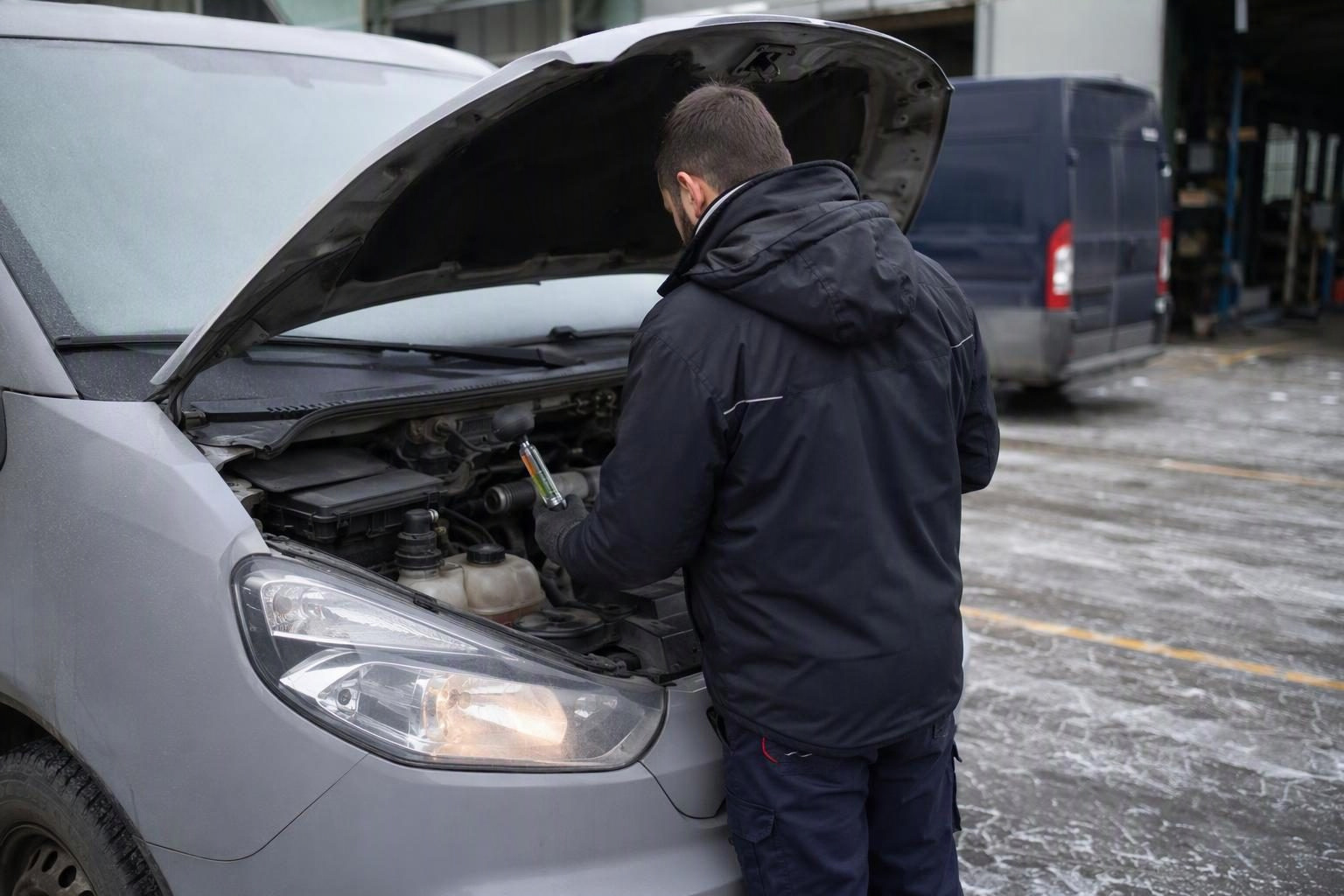
Coolant in vans before winter: planning a check of frost protection
Find out which vans need a pre-frost coolant check, how to interpret the test result and plan visits without unnecessary downtime.
Read article
Lighting checks for a delivery fleet: how to plan inspections and repairs without unnecessary downtime
How to check company van lights, record faults and schedule measurements and repairs without taking several vehicles off the road at once.
Read article
Diesel van will not start after an overnight frost: when to book fuel system diagnostics
Find out what symptoms to report, when to hold a van back from a trip and what the workshop should check in the fuel system.
Read article