
How the loading method affects operational reports of a delivery van
Loading is not just about convenience at unloading - it is one of the main factors affecting braking, tyre wear, suspension and the drivetrain. Below: symptoms, daily checks and administrative actions that will reduce the number of faults and the risk of liability.

Why the loading method matters for operation
Weight and load distribution directly affect vehicle behaviour. Excess mass or its shift changes braking, handling and how forces are transmitted through the axles and suspension.
This translates into real symptoms that drivers encounter: increased braking distance, less stable cornering, a sagging rear of the vehicle or sudden jolts when cargo shifts. These symptoms increase the risk of collisions or vehicle damage.
From an administrator’s perspective: irregular loading of the fleet means faster parts wear and the need for earlier repairs. Exceeding the permitted mass also carries the risk of fines and issues with the insurance policy.
Typical symptoms resulting from overloading or poor distribution
Drivers and the workshop will notice some recurring signals - some are immediate, others appear over time.
It is useful to distinguish: driving symptoms (felt while driving) and technical symptoms (parts wear).
- Longer braking distance and a “diving” front under heavy braking - an effect of mass shifting forward.
- Sagging rear body, knocks or clunks when passing over bumps - indicates overloaded springs/shock absorbers or worn bearings.
- Uneven or rapid tyre wear, more frequent punctures from overheating - associated with overloading and incorrect tyre pressure for the given load.
- Difficulty maintaining the driving line and sudden cargo shifts - unsecured cargo causes abrupt changes in load distribution.
- Drivetrain symptoms: clutch slipping when starting on an incline, smoke or smell of a burning clutch, increased gearbox load - when heavier loads are carried regularly.
- Higher fuel consumption - greater mass means higher fuel use, as confirmed by fleet tests.
Daily checks for the driver - quick and practical
The driver can detect most problems before they turn into repairs. Short, repeatable actions minimise risk.
These are not workshop procedures - if something raises doubts, the driver should report it to the workshop or administrator.
- Check tyre pressure before departure - adjust it to the planned load (different pressure for an empty van, different for a full one).
- Visual tyre inspection: uneven wear, cracks or bulges on the sidewall are a signal to contact the service immediately.
- Quick inspection of the suspension: does the vehicle sit “level” or is the rear sagging? Are there new knocks when passing over bumps?
- Check that the cargo is secured - straps/boards/rails are in place, heavier items positioned near the axle, nothing moves during braking.
- Report any unusual behaviour: longer braking distance, distinct rumbling or smell of burning.
What the fleet administrator should do - procedures and monitoring
An administrator, even in a small fleet, can significantly reduce costs and risk through simple procedures and monitoring. You do not need to implement complex systems immediately - a clear policy and a few tools are enough.
Key goals: prevent overloading, detect recurring overloads and plan service earlier for vehicles that regularly carry heavier loads.
- Introduce and enforce clear load limits consistent with the vehicle placard and manual (GVWR/GVW and axle limits).
- Weigh vehicles periodically or when load configurations change - weight is evidence in disputes and a way to detect exceedances.
- Develop a tyre pressure chart for different load combinations and place it in the vehicle (e.g. a sticker on the door or a driver instruction).
- Consider TPMS (tyre pressure and temperature monitoring) or telematics that report overloads or unusual manoeuvres - even simple route logs help identify risky practices.
- Shorten service intervals for vehicles that regularly carry heavy loads - suspension, brakes and axles should be checked more frequently.
- Introduce procedures for documenting cargo (waybill, weights, photos) - important for insurance claims and inspections.
Good practices for securing and arranging cargo
Correct placement and securing of cargo solves most problems. It is not only the rule “heavier on the bottom” - details about position relative to the axles and immobilisation method are important.
A well-planned load layout also makes the driver’s work easier and speeds up unloading.
- Distribute weight evenly along the length and width of the load space; place heavier items over the axle or close to the vehicle’s center of gravity.
- Avoid large masses at the rear or too far outboard - this causes excessive axle load and worsens handling.
- Use straps, rails and restraints; cargo must not move freely during braking or cornering.
- Keep the center of gravity low - placing heavy items low reduces the risk of oversteer and rollover.
When to send the vehicle to the workshop and how to document events
Not all symptoms require immediate repair, but some must be taken seriously. If new noises, burning smells, significant deviations in vehicle behaviour or obvious tyre damage occur - go to the service immediately.
Good documentation facilitates service procedures and potential insurance cases - keep photos, cargo lists, weights and service reports.
- Report to the workshop any suspicion of overloaded suspension, bearings or clutch - the mechanic will inspect components and recommend next steps.
- Store weighing records and photos of the cargo - this is proof that procedures were or were not followed.
- In case of a road damage incident or claim - cargo and weight documentation can determine liability and the payout of compensation.
Summary
The way a vehicle is loaded is a simple and effective control point for fleet costs. For the driver: daily tyre pressure checks, visual cargo inspections and immediate reporting of worrying symptoms. For the administrator: weights, tyre-pressure charts, clear loading procedures and more frequent inspections for vehicles that carry heavier loads. These actions reduce breakdowns, lower fuel and repair costs and limit the risk of fines and insurance problems. If you need service support or help with procedures, check the offering for delivery-van servicing and fleet support.
More from the FleetPoint knowledge base
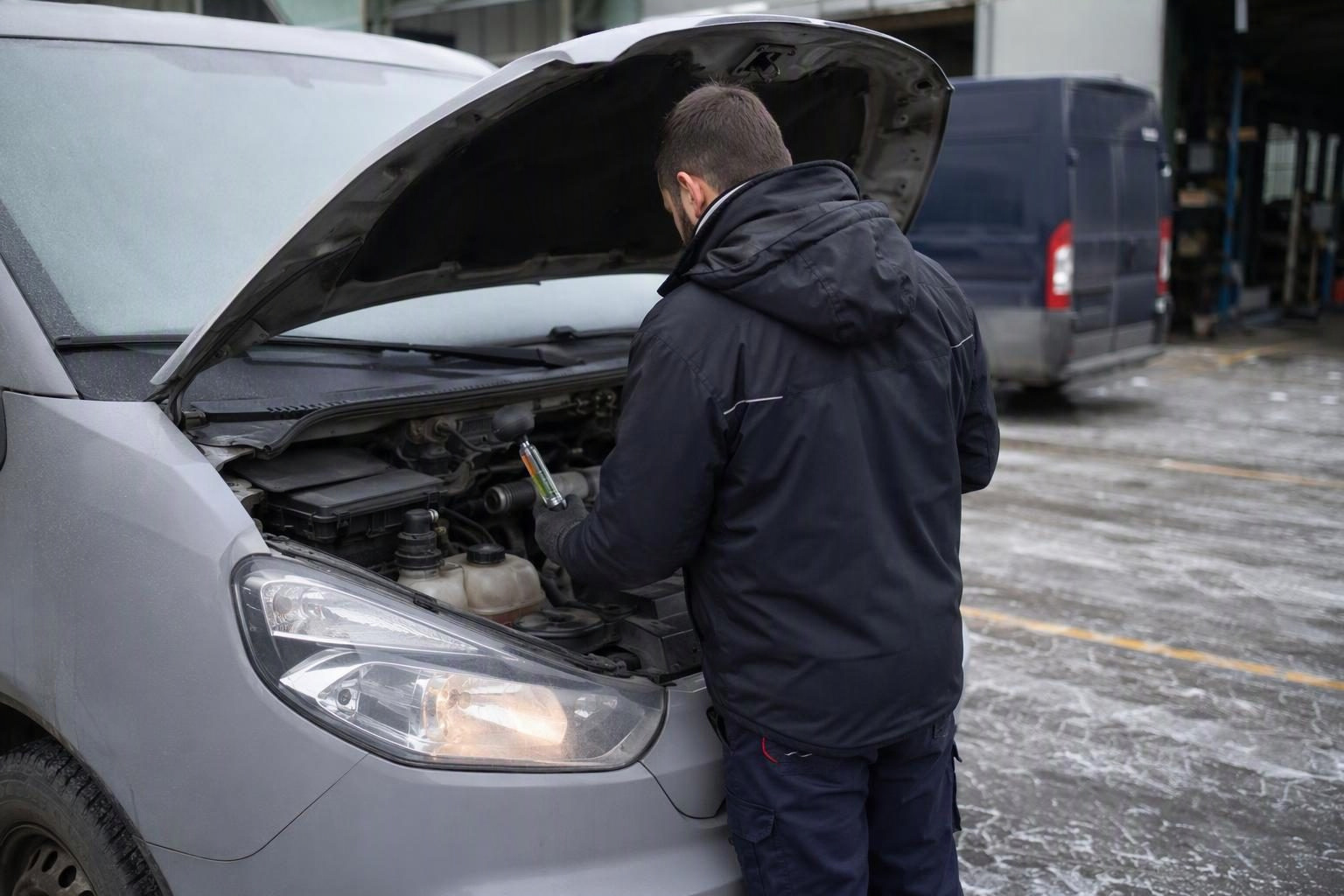
Coolant in vans before winter: planning a check of frost protection
Find out which vans need a pre-frost coolant check, how to interpret the test result and plan visits without unnecessary downtime.
Read article
Lighting checks for a delivery fleet: how to plan inspections and repairs without unnecessary downtime
How to check company van lights, record faults and schedule measurements and repairs without taking several vehicles off the road at once.
Read article
Diesel van will not start after an overnight frost: when to book fuel system diagnostics
Find out what symptoms to report, when to hold a van back from a trip and what the workshop should check in the fuel system.
Read article