
When should recurring repairs prompt a company to analyze replacing a vehicle?
The 'repair or replace' decision should be driven by data, not intuition. We describe financial and operational indicators, proven heuristics, and a step-by-step process that will enable a rational decision about replacing a company vehicle.

Start with TCO, not age or mileage
In practice the Total Cost of Ownership (TCO) decides, not age or the odometer alone. TCO aggregates all expenses: depreciation, fuel, M&R (maintenance & repair), insurance, taxes, downtime costs and residual value.
For a replacement decision it is important to compare the projected TCO of continued operation with the cost of acquiring or leasing a new vehicle adjusted for the expected resale value.
- Collect historical data (at least 12-24 months) at the vehicle level: invoices, fuel costs, downtime.
- Including hidden costs (e.g. the cost of a replacement vehicle, driver productivity loss) improves decision accuracy.
Key metrics you must monitor
A few measures give a quick view of whether a vehicle is entering an unprofitable operating phase. Monitor them systematically and compare to fleet trends.
Numbers alone are not enough - compare them against your own historical benchmarks and similar vehicle types in the company.
- Cost per kilometer (CPM) - total operating cost divided by kilometers driven.
- Annual M&R expenditures (monetary amount and number of service visits).
- Average downtime per failure and total downtime.
- Residual value and depreciation - decline in market value over time.
Warning signals and industry heuristics
The industry uses several practical filters that speed up the decision to perform a more detailed analysis. Treat them as starting points, not final rules.
For example: a significant jump in cost/km (the so-called inflection point) or a single repair with a cost comparable to a large share of the vehicle’s market value is a signal for a serious TCO review.
- “Single repair vs. vehicle value” - a popular filter (often cited rule ~50%) - use it only as a quick trigger for analysis.
- Increasing frequency of unplanned repairs and downtime is an operational signal: hidden costs are rising faster than the invoiced workshop expenses.
- Note: heuristics depend on the local used-car market and parts availability - always verify with local data.
Non-financial factors that may force replacement
Not all reasons are strictly economic. Sometimes driver safety, regulatory compliance or company image should tip the decision despite acceptable repair costs.
Technical obsolescence (e.g. lack of ADAS, difficulty obtaining parts for older versions) shortens practical service life regardless of current costs.
- Safety: lack of driver-assist systems or increasing risk of critical failures.
- Regulatory compliance: emissions standards or technical requirements that may force fleet renewal.
- Driver satisfaction and image: frequent breakdowns affect morale and the company’s reputation.
Step-by-step decision process
A formalized process reduces the risk of a wrong decision. The steps below are a practical sequence of actions that is easy to implement in any company.
Include 2-5 year scenarios and compare different options: continued operation, major overhaul, buying used, leasing/purchasing a new vehicle.
- Step 1: Gather historical data and normalize costs at the vehicle level.
- Step 2: Calculate CPM, R/M&R and downtime; determine the trend and check for a cost inflection point.
- Step 3: Run scenario analysis (2-5 years): forecast TCO for the ‘keep repairing’ vs ‘replace’ options.
- Step 4: Assess non-financial risks (safety, parts availability, regulatory compliance).
- Step 5: Consult financial consequences with accounting/leasing provider (tax implications, contract terms).
- Step 6: Plan remarketing for units selected for withdrawal (maintaining technical condition improves residual value).
Implement monitoring and alert rules
To catch units before cost escalation destroys residual value, implement an alert and reporting system. Automatic rules streamline the work of the fleet manager and the service department.
Well-designed dashboards facilitate communication with finance - numbers are a stronger argument than intuition.
- Automatic alerts: CPM, percentage change in M&R, number of failures in a given period - act when you detect an unfavorable trend.
- Regular fleet reviews: quarterly reviews of TCO results and a list of candidates for replacement.
- Remarketing plans: preparing vehicles for sale raises residual value and reduces total replacement costs.
Summary
The decision to replace a vehicle should result from comparing the projected TCO of continued operation with the cost of replacement, not from a single metric. Use metrics (CPM, M&R, downtime, residual value), simple heuristics as filters and a 2-5 year scenario analysis. Include assessment of safety, parts availability and leasing/tax consequences in the process. Systematic monitoring and alert rules will help identify vehicles before costs grow beyond the benefits of continued operation.
More from the FleetPoint knowledge base
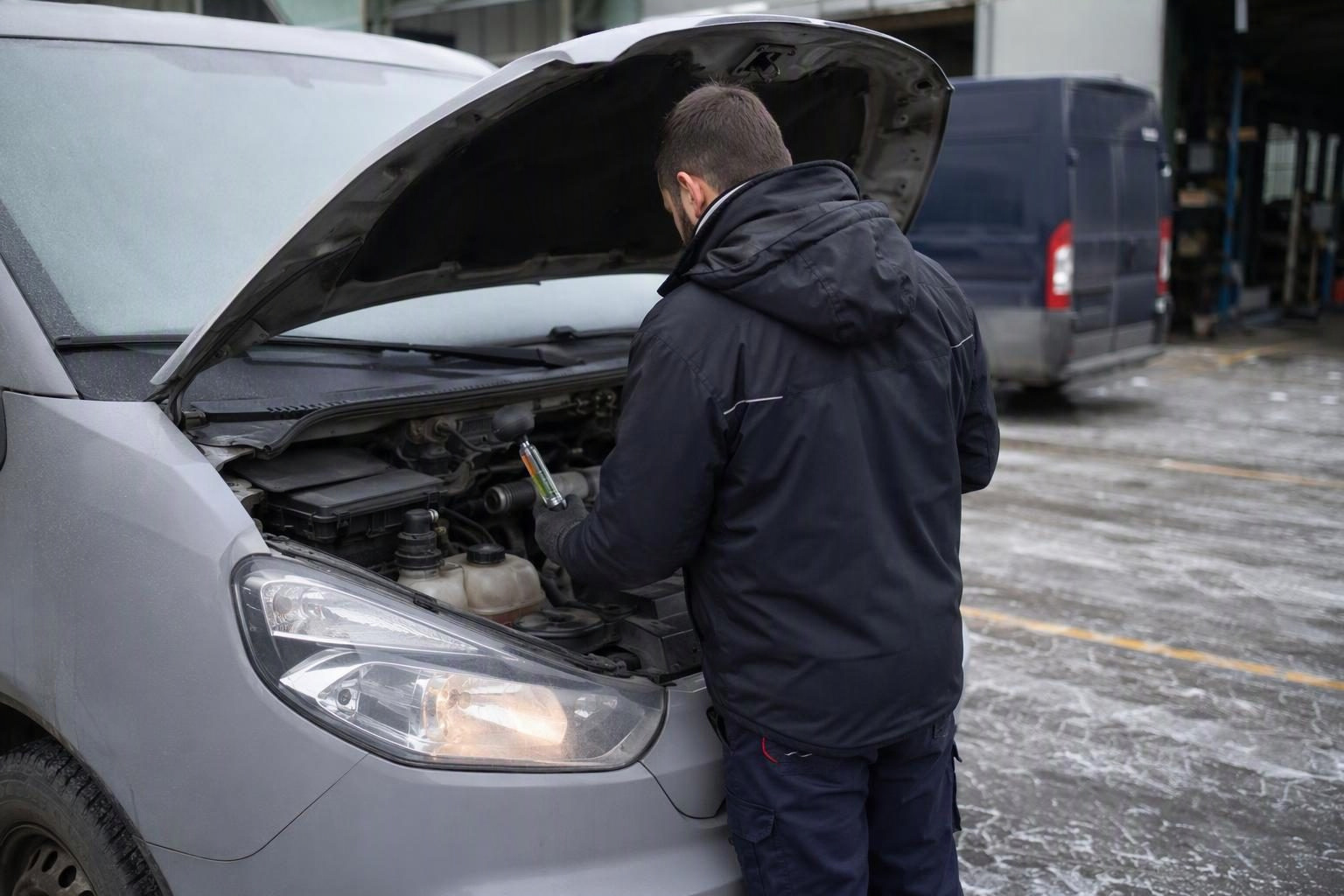
Coolant in vans before winter: planning a check of frost protection
Find out which vans need a pre-frost coolant check, how to interpret the test result and plan visits without unnecessary downtime.
Read article
Lighting checks for a delivery fleet: how to plan inspections and repairs without unnecessary downtime
How to check company van lights, record faults and schedule measurements and repairs without taking several vehicles off the road at once.
Read article
Diesel van will not start after an overnight frost: when to book fuel system diagnostics
Find out what symptoms to report, when to hold a van back from a trip and what the workshop should check in the fuel system.
Read article