
Van roadworthiness test: how to prepare a company vehicle for an SKP inspection and avoid downtime
Do not leave a van inspection until the last day of validity. Check the deadline in CEPiK (Poland's vehicle and driver register), schedule a vehicle check in advance, and fix any defects before visiting an SKP. A practical approach for businesses is to set an alert 30 days before the deadline, inspect the vehicle and make any necessary repairs 14-21 days beforehand, and arrange a replacement vehicle for the inspection day. This is an organizational buffer, not a statutory requirement. If the inspection is already expired or the diagnostic inspector identifies a dangerous defect, do not send the vehicle onto the road. Arrange towing or a mobile service.
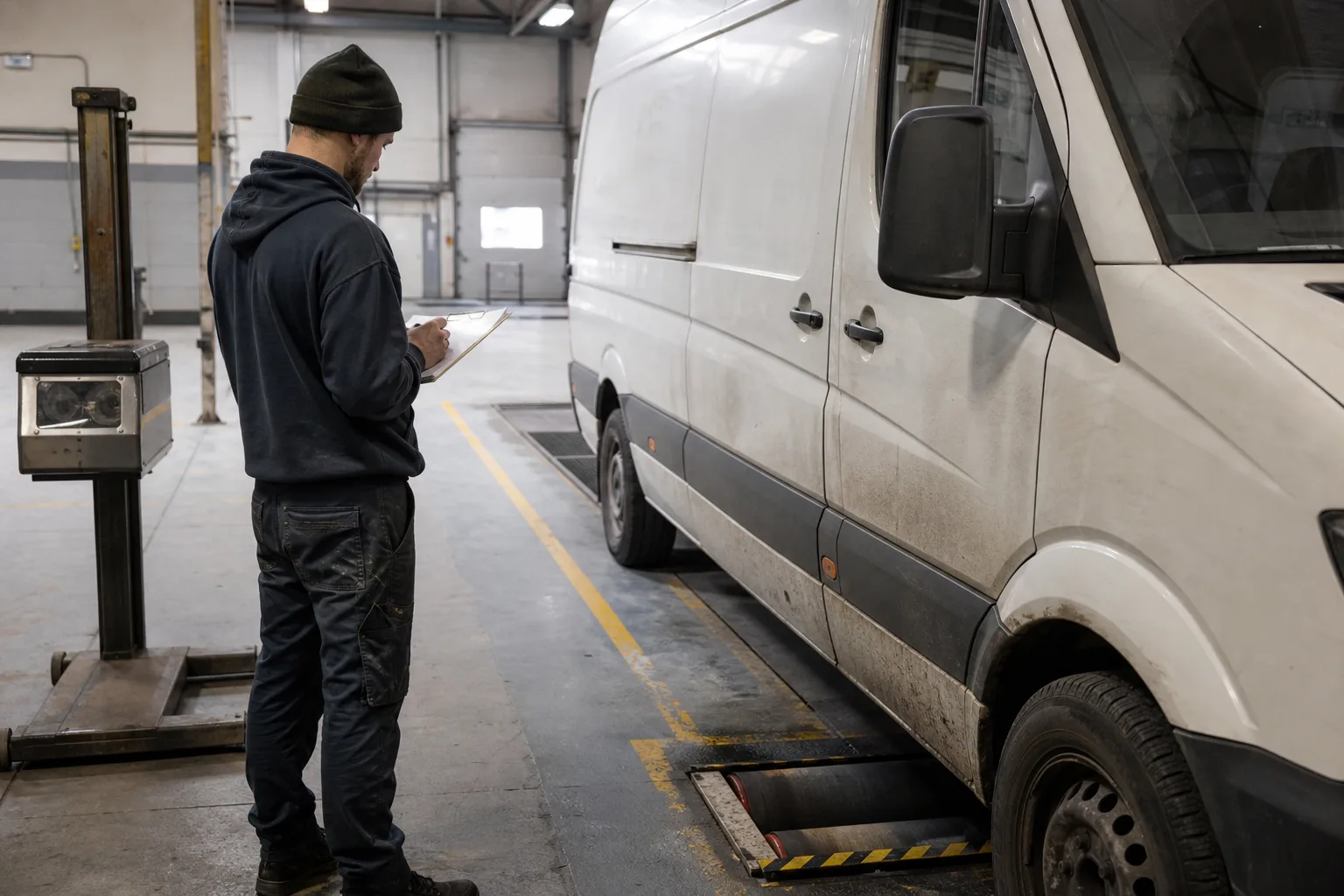
First, establish the deadline and vehicle type
You can check the inspection deadline using the “Check your vehicle” service in CEPiK (Poland’s vehicle and driver register). Record it in your fleet register along with the registration number, VIN, DMC (maximum permissible gross vehicle weight), person responsible, and station booking date. Do not base your plan solely on a note in the cab or information from the driver.
The term “van” does not determine the inspection deadline. The vehicle’s registration details, category, purpose, and any applicable exceptions all matter. For a typical van registered as a goods vehicle and not covered by an exception, the general schedule is a first inspection before 3 years have passed since first registration, the next inspection before a further 2 years have passed, and annual inspections thereafter. Check CEPiK and the vehicle documents for the definitive deadline.
- Set an alert for the person responsible for the vehicle 30 days before the deadline.
- Schedule a vehicle check 14-21 days before the deadline and allow time for any necessary repairs.
- Book an SKP inspection and confirm who will deliver the vehicle at least 14 days before the deadline.
Choose an inspection station and account for the inspection fee
When booking, provide the DMC, vehicle type, and type of inspection. A basic SKP (Polish vehicle inspection station) carries out periodic and additional inspections of vehicles with a DMC of up to 3.5 tonnes. A regional SKP can inspect vehicles in all DMC categories. If the vehicle exceeds 3.5 tonnes, has a non-standard body, or is used for a special purpose, confirm in advance that the station carries out the required inspection.
As of 19 September 2025, the official fee for a periodic inspection of a goods or special-purpose vehicle with a DMC of up to 3.5 tonnes is PLN 149. For such a vehicle with a DMC above 3.5 tonnes and up to 16 tonnes, the fee is PLN 234. A gas installation may involve an additional inspection fee. When booking, confirm the fee applicable to the specific vehicle.
- Tell the station the DMC and whether the vehicle has an LPG installation or a non-standard body.
- Confirm whether the inspection includes any required additional procedures.
- Do not confuse the inspection fee with the cost of repairing defects found during the inspection.
Pre-inspection check: what the driver can inspect
A brief check before the visit does not replace the diagnostic inspector’s measurements, but it can help identify obvious problems. Ask the driver to check the vehicle while it is parked, preferably in good light. Brakes, steering, suspension, and electrical system defects should be assessed by a professional service provider. Do not try to repair these systems yourself.
The inspection covers, among other things, vehicle identification, brakes, steering, lighting, visibility, wheels and tyres, suspension, chassis, equipment, and exhaust emissions or smoke. Pay attention to warning lights and unusual symptoms reported by drivers, even if they do not occur on every journey.
- Check the dipped and main beams, position lights, indicators, brake lights, and reversing lights.
- Check the condition of the wiper blades and the operation of the washers, horn, seat belts, and locks.
- Look for visible tyre damage and cracks in the windscreen within the driver’s field of vision.
- Look for leaks and warning lights, and check that the number plates and identification markings are legible.
- If the driver reports noise, the vehicle pulling to one side, or braking problems, send it to a service provider before the SKP inspection.
Prepare the vehicle and driver for the visit
Do not send a van for inspection loaded with goods, tools, and loose equipment. A load may obstruct access to the areas being checked, and unloading it at the station will take time. Remove items that block access to vehicle components and prepare the vehicle so the diagnostic inspector can carry out the inspection without organizational complications.
The driver should know the address and appointment time, have the keys, and be able to share information about previous repairs, symptoms, and any non-standard bodywork. If the vehicle requires an additional procedure, do not assume that every station can carry it out. Confirm this when booking.
- Remove loose cargo and items that obstruct access to the vehicle.
- Give the driver the contact number of the fleet manager.
- Record reported symptoms and recent repairs so you do not have to rely solely on the driver’s memory.
- Plan a replacement vehicle, a second vehicle for the route, or reschedule tasks for the inspection day.
Negative result: 14 days does not extend inspection validity
If the diagnostic inspector identifies a defect, ask for a certificate and a precise description of the issue. A positive result with a minor defect does not restrict further use of the vehicle, but the defect must be repaired. A serious or dangerous defect results in a negative inspection outcome. Do not rely on a verbal description alone, as the service provider and the person coordinating the repair need specific information.
Once the defects have been repaired, the same SKP may carry out a limited recheck of the components and systems where problems were found, provided you bring the vehicle back within 14 days. These 14 days apply to the scope of the recheck. They do not extend the inspection’s validity or authorize driving.
If the inspection has expired or a dangerous defect has been identified, do not send the vehicle onto the road, even directly to a repair shop. Arrange towing or a mobile service. For other defects, check the inspection status and establish exactly what the defect concerns before deciding whether to drive the vehicle to a repair shop. Do not assume that a negative result, by itself, permits further driving. If in doubt, contact the station or service provider and choose safe transportation.
- Record the exact description of the defects and check which systems need to be reinspected.
- Book a repair and recheck appointment straight away.
- If the inspection has expired or there is a dangerous defect, arrange towing or a mobile service.
- Activate your replacement plan before the vehicle is removed from the delivery schedule.
Turn a one-off visit into a regular fleet process
With several or a dozen vehicles, booking a station is rarely the main challenge. More costly is having no clear owner for the task: the driver assumes the office is tracking the deadline, while the office waits for information from the driver. Keep one list of deadlines and assign responsibility for each vehicle.
After the inspection, record the date, result, defects found, repair cost, and recheck date. This helps you identify which vehicles repeatedly return with similar problems and whether downtime is due to missed checks or breakdowns that require a separate service plan.
- Make sure every vehicle has an inspection deadline recorded in the fleet register.
- Track the percentage of inspections passed on the first attempt and the time from a negative result to repair and recheck.
- Review the list of deadlines falling within the next 30-60 days once a month.
- Treat these metrics as company management tools, not statutory obligations.
Summary
If your van needs diagnostics or repairs before an SKP inspection, contact FleetPoint about van servicing and repair coordination.
More from the FleetPoint knowledge base
Coolant in vans before winter: planning a check of frost protection
Find out which vans need a pre-frost coolant check, how to interpret the test result and plan visits without unnecessary downtime.
Read article
Lighting checks for a delivery fleet: how to plan inspections and repairs without unnecessary downtime
How to check company van lights, record faults and schedule measurements and repairs without taking several vehicles off the road at once.
Read article
Diesel van will not start after an overnight frost: when to book fuel system diagnostics
Find out what symptoms to report, when to hold a van back from a trip and what the workshop should check in the fuel system.
Read article