
Diesel van will not start after an overnight frost: when to book fuel system diagnostics
If your van will not start, stalls shortly after starting, or the problem returns after every cold night, do not assume the next trip will go ahead as planned: arrange diagnostics. Difficult starting alone does not prove that the fuel filter is blocked, so collect the symptoms, details of the last refuelling and service history before reporting the issue.
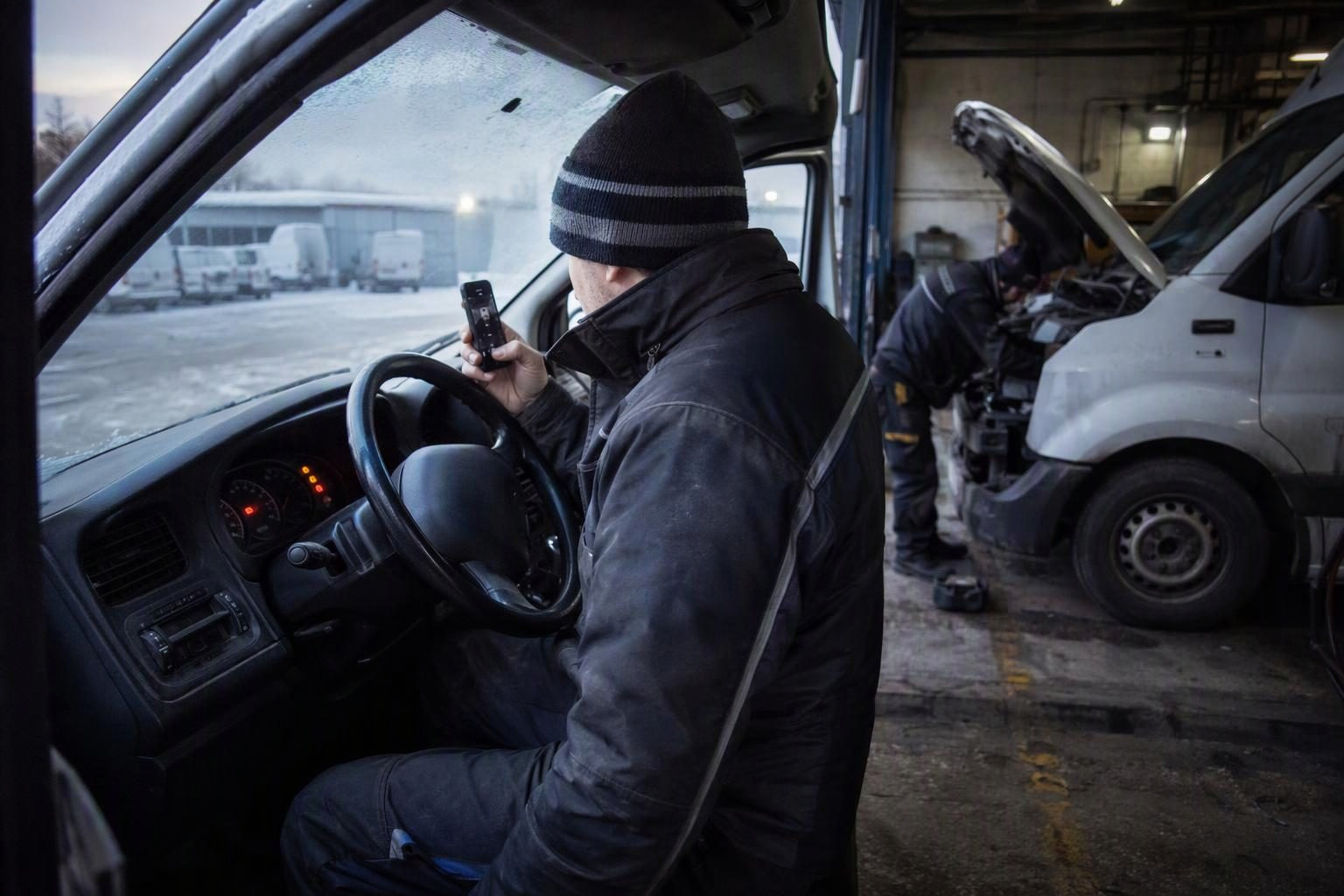
Assess the symptoms first, do not guess the cause
A van that will not start in the morning can disrupt a delivery, a service visit to a customer or several jobs in a row. It is understandable to suspect the fuel filter straight away, but difficult starting alone does not confirm that it has failed. Similar symptoms can be linked to the battery or starter motor, glow plugs, restricted fuel supply, contaminated fuel or a problem with the fuel supply pump.
In your report, distinguish between three situations: the starter turns the engine normally, turns it slowly, or the engine does not turn at all. Also note whether the engine started, stalled a moment later or lost power. This does not replace a diagnosis, but it helps the workshop narrow down what to check.
There is no single confirmed cranking-time limit or universal number of starting attempts that applies to the Sprinter, Crafter, Transit and Master. The procedure depends on the specific engine, model year and vehicle handbook. Do not set your own threshold for the entire fleet; if in doubt, follow the handbook for the vehicle concerned.
When to put the trip on hold and report the vehicle
As a fleet administrator, treat the issue as urgent if the vehicle will not start, starts and then stalls, similar problems recur after cold nights, or power drops under load. It becomes more urgent if the workshop reads fault codes relating to fuel pressure. This is a cautious fleet-management rule, not a universal manufacturer threshold.
With these symptoms, do not assume the vehicle will complete its morning run without problems just because it started after warming up. Report the need for diagnostics and check whether a replacement vehicle is available if the van is needed for work. If a breakdown occurs en route, arrange roadside assistance or towing according to the circumstances and your company procedures.
A single difficult start followed by normal running does not prove that the filter has failed. Record the incident and monitor whether it happens again. However, if the next morning’s departure could risk the vehicle failing to start or stalling, it is safer to arrange diagnostics than to treat the trip as certain.
What to include in a service report
A complete report reduces back-and-forth and helps avoid diagnosing the issue based only on the words “it will not start”. Collect the details from the driver straight away, before the morning’s events become harder to recall. The checklist below is a practical way to narrow down the cause, not a mandatory manufacturer form.
- Vehicle: model, model year and, if available, VIN.
- Conditions: temperature, approximate time the symptoms appeared and whether the vehicle had been parked overnight.
- Starting: whether the engine turns at all, whether the starter turns it slowly or normally, whether the engine started and whether it later stalled.
- Warning lights and messages: record what the driver noticed on the dashboard. Any fault codes relating to fuel pressure should be read by the workshop during diagnostics.
- Behaviour while driving: whether power dropped before the incident or the problem occurred under load.
- Refuelling: date, location and amount of the last refuelling; keep the receipt if there is any doubt about the fuel.
- Service history: date of the last fuel filter change, if known, and whether the problem recurred after the vehicle warmed up or the following morning.
What the workshop should check
Fuel system diagnostics should not consist solely of replacing the filter “to see if it helps”. The workshop can read fault codes and check for flow restrictions, leaks and fuel supply issues. Depending on the symptoms, it may also measure the vacuum or pressure between the filter and the pump. If the engine will not start, the flow from the filter to the high-pressure pump inlet may also need to be checked.
When reporting the vehicle, ask what checks were carried out and what confirmed the cause of the problem. If the workshop recommends replacing the filter, ask whether it also checked the flow and the other components indicated by the symptoms. Water in the fuel can make starting difficult and damage the injection system, so it is important to identify the cause rather than simply get the vehicle to start temporarily.
There is no single fuel filter replacement mileage that applies to all the models listed. Check the service schedule for the specific vehicle. Similarly, it is not possible to give a reliable single figure for diagnostic time or cost without identifying the fault and obtaining a quote for the vehicle concerned.
Winter-grade fuel in 2026: an important calendar, but not a diagnosis
In Poland, the quality requirements for diesel fuel sold on the market cover transitional-grade fuel from 1 October to 15 November, and winter-grade fuel from 16 November to the end of February.
The CFPP requirement, meaning the cold filter plugging point in laboratory testing, is a maximum of -10°C during the transitional period and -20°C during the winter period. These parameters describe fuel sold on the market. They do not confirm that a particular vehicle is working correctly or guarantee that it will start at every temperature. The seasonal calendar therefore cannot tell you whether the fuel or filter caused the fault.
If you suspect a fuel quality issue, record the filling station and keep the refuelling receipt. Fuel quality information can be checked through the UOKiK system (the Polish Office of Competition and Consumer Protection). Difficult starting alone is not proof that fuel from the station failed to meet the requirements. Do not treat a fuel additive as a substitute for diagnostics; check that the product is suitable for the vehicle in its handbook.
A morning scenario: deciding what to do with the vehicle
A fleet-management example: after a cold night, a diesel van takes a long time to start and then stalls. The driver reports that the starter turns the engine, gives the temperature and time, and provides details of any warning lights and the last refuelling. The administrator checks the fuel filter history and records whether similar symptoms have occurred before.
In this situation, it is not worth blaming the fuel or sending the vehicle out on a route just because it started once. The report to the workshop should request diagnostics, and the dispatcher should check whether a replacement vehicle is available. After the repair, record the identified cause and the work carried out in the vehicle’s history, so that any similar symptoms can be compared with the earlier report.
Summary
Set a simple company rule: failure to start, stalling after starting, recurring cold-start problems or loss of power mean the vehicle should be reported for diagnostics and the need for a replacement vehicle assessed, not assumed ready for a trip. FleetPoint can coordinate van servicing through a single point of contact, monitor the work and provide a clear cost breakdown, making it easier to manage repair decisions and reduce the organisational cost of vehicle downtime.
Sources
- Rozporządzenie Ministra Klimatu i Środowiska z dnia 26 czerwca 2024 r. w sprawie wymagań jakościowych dla paliw ciekłych - Dziennik Ustaw / Sejm RP
- Rozporządzenie zmieniające wymagania jakościowe dla paliw ciekłych, Dz.U. 2024 poz. 1980 - Urząd Regulacji Energetyki
- Paliwa przejściowe - Polska Izba Paliw Płynnych
- Jakość paliw - Urząd Ochrony Konkurencji i Konsumentów
- Temperatura zablokowania zimnego filtra - temperatura mętnienia - Ecol
More from the FleetPoint knowledge base
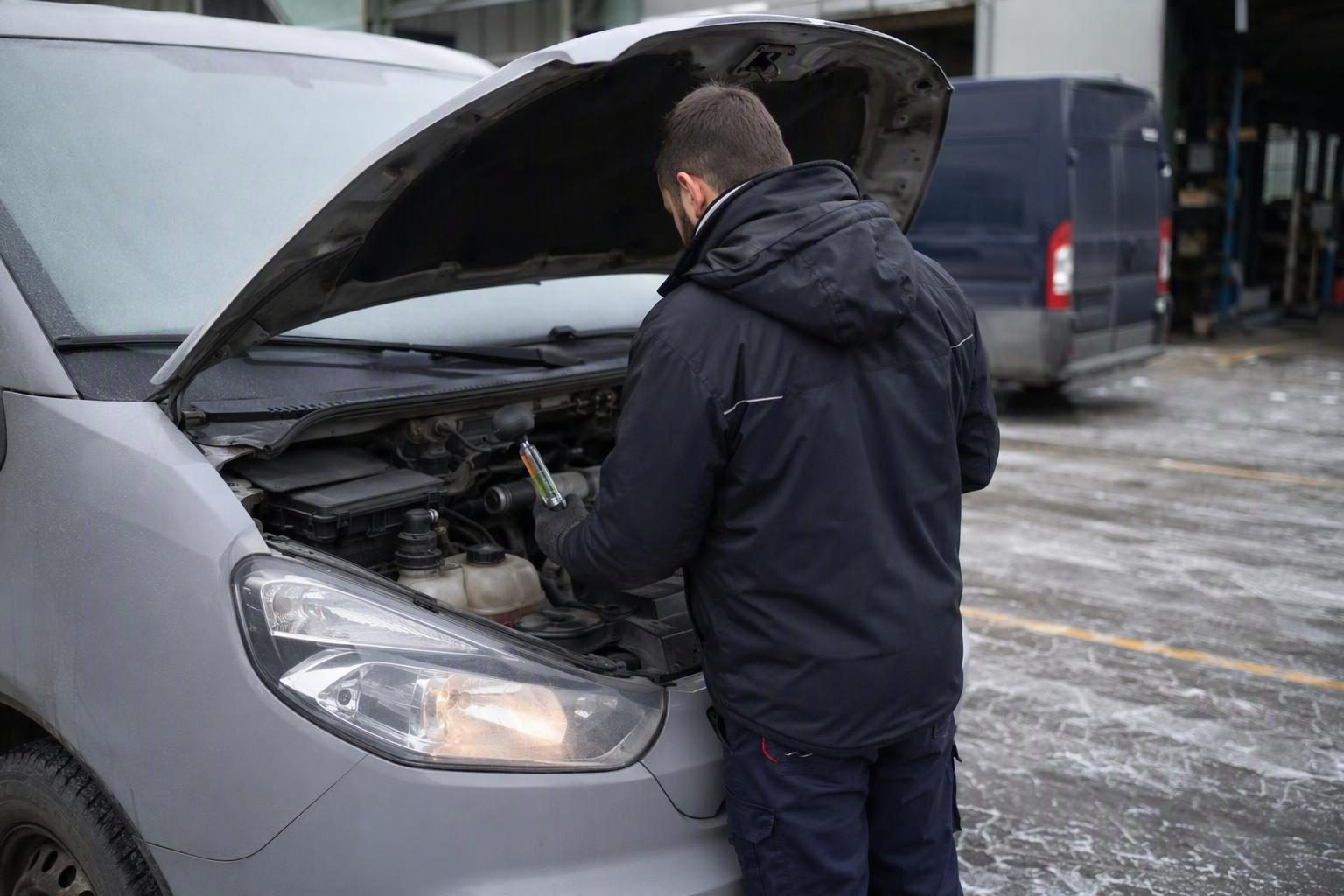
Coolant in vans before winter: planning a check of frost protection
Find out which vans need a pre-frost coolant check, how to interpret the test result and plan visits without unnecessary downtime.
Read article
Lighting checks for a delivery fleet: how to plan inspections and repairs without unnecessary downtime
How to check company van lights, record faults and schedule measurements and repairs without taking several vehicles off the road at once.
Read article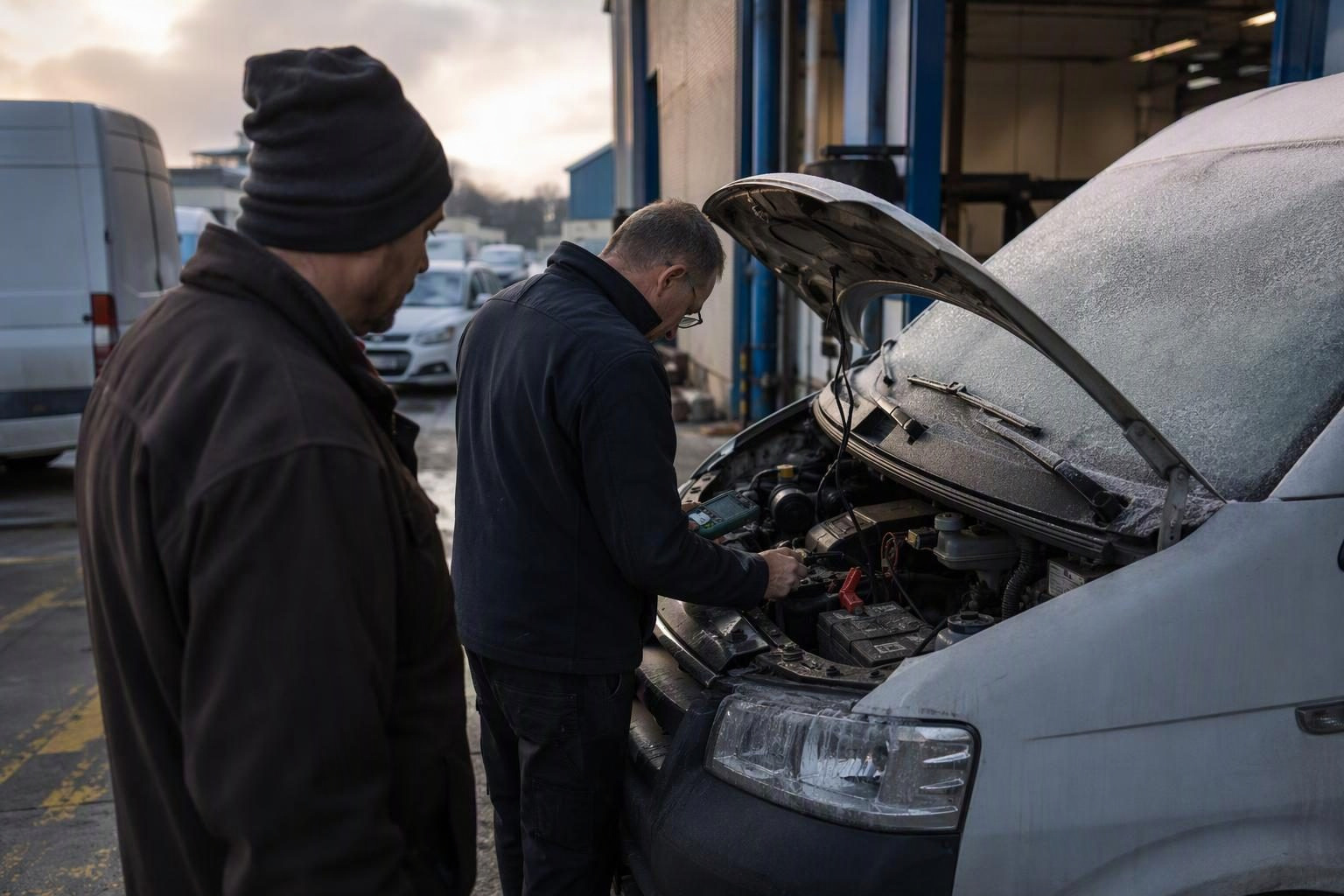
Van batteries before the first frost: how to prioritise checks without taking the whole fleet off the road
How to prioritise vans for battery checks and schedule workshop visits. Learn the warning signs, priorities and planning pitfalls.
Read article