
Coolant in vans before winter: planning a check of frost protection
The coolant level alone does not confirm that a van is protected against frost. First check the service records and look for symptoms, then verify the protection with a test on a cold engine and compare the result with the vehicle manufacturer's requirements.
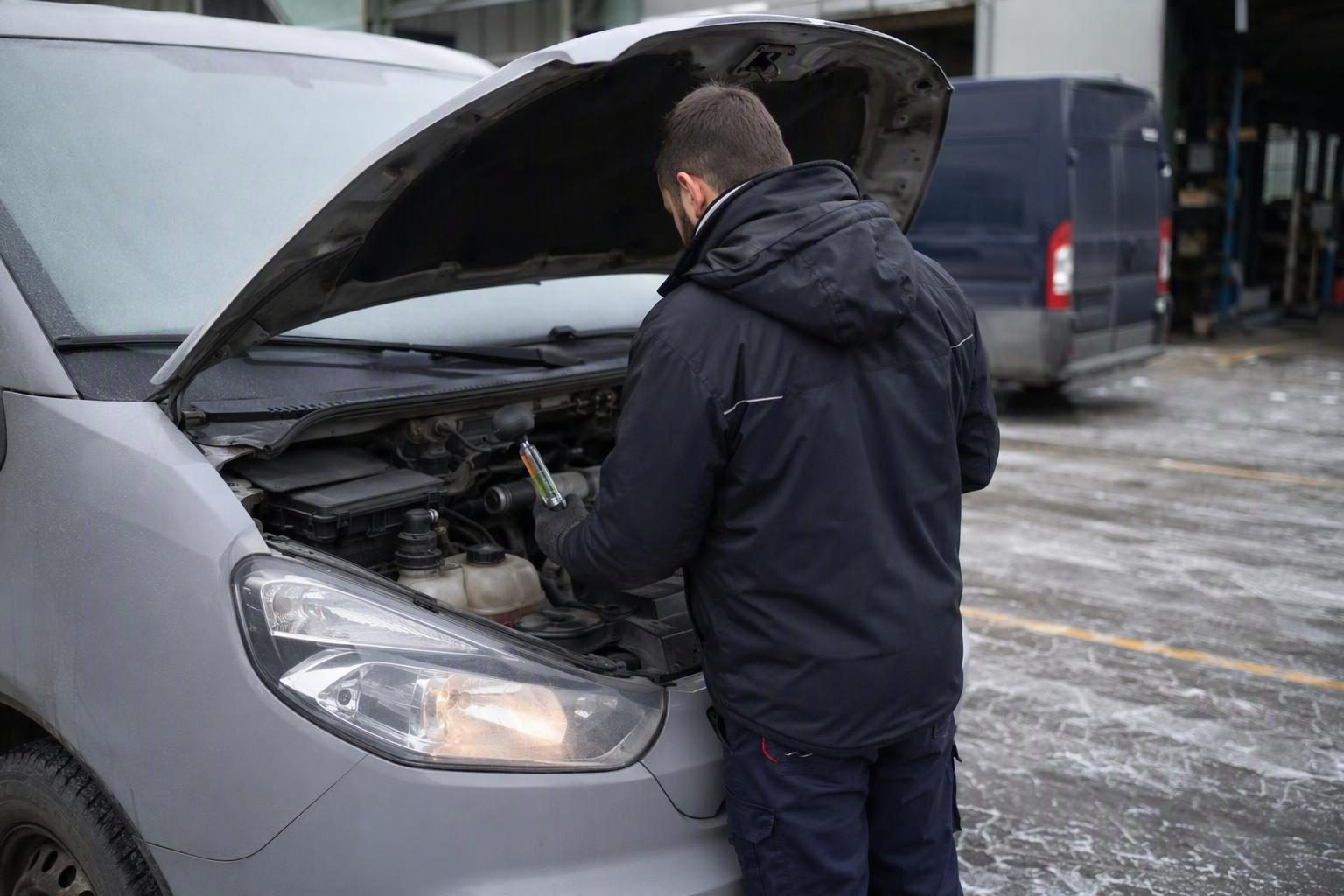
Do not select vehicles based on age alone
If several vans are due to start intensive winter work, do not send them all to a garage based only on their year of manufacture. A vehicle’s age alone does not indicate whether the coolant still provides the required protection. Likewise, the correct level in the reservoir does not confirm the freezing point.
Start with the service history and the handbook for the specific vehicle. Check which coolant or specification is required and whether the date of the last check or replacement is recorded. There is no single replacement interval for all vans, nor is there a confirmed requirement to replace the coolant before every winter. Make the decision according to the manufacturer’s schedule and the diagnostic results.
- Vehicles with coolant loss, visible signs of a leak, a cooling system warning or an unknown frost protection test result need an urgent check.
- Plan diagnostics sooner if the driver reports poor cabin heating, the engine fails to reach operating temperature or it overheats.
- Vehicles with no symptoms and a current test result that meets the manufacturer’s requirements can remain on the normal service schedule.
Coolant level, condition and frost protection require separate checks
Check the level with the engine cold, referring to the MIN and MAX marks on the expansion tank. A driver may notice that the level is too low or that there are signs of a leak on visible components. However, a visual inspection does not replace a freezing point test.
Check frost protection using a tester that takes a coolant sample. Compare the result with the requirement in the vehicle handbook, not with a single value adopted for the whole fleet. There is no universal threshold that is suitable for every model. ADAC’s general guidance of protection down to -25°C is not a specification for a particular van.
A professional check covers the coolant level, contamination, freeze protection and the system’s leak-tightness. Further tests are selected according to the symptoms. If the vehicle overheats, the workshop may check the temperature reading, radiator, fan, thermostat, coolant pump and pressure cap seal, among other things.
Choose coolant by specification, not colour
The coolant colour and product name alone are not enough to confirm that it is suitable for a particular vehicle. Before topping up or replacing it, check the specification or approval required by the vehicle manufacturer. Not all coolants can be safely mixed, so you must also confirm compatibility with the coolant already in the system.
Do not try to improve the result by adding a large amount of concentrate yourself. A higher proportion of antifreeze does not always mean better protection, and undiluted concentrate can reduce both freeze protection and engine cooling performance. The mixture and any adjustment should be determined by the documentation and test result.
Prioritise visits according to risk and available information
Instead of booking the whole fleet in at once, divide vehicles according to urgency. Send vehicles with a warning, coolant loss or signs of a leak for diagnostics first. Then identify vehicles without a documented frost protection test. Vehicles with no symptoms and a current result that meets the manufacturer’s requirement can remain on the normal service plan.
Keep a check record for each vehicle. This means that decisions about booking dates do not rely solely on the driver’s memory or on someone noticing a low coolant level during another visit.
- Vehicle VIN, model and year of manufacture.
- Date of the last check or replacement and the coolant requirement given in the documentation.
- Coolant level with the engine cold, symptoms and details of any visible signs of a leak.
- Frost protection test result, compared with the manufacturer’s requirements.
- Workshop findings, recommended further work and the date of the next check, if specified in the documentation.
Book visits to minimise vehicle downtime
There is no confirmed standard time for checking or replacing coolant across different van models. Before booking, ask the workshop what work will be carried out and how long it will take for the specific vehicle. Schedule the visit around vehicle availability and the workshop’s workload rather than assuming every check will be completed during a short stop.
Deal with vehicles showing urgent symptoms outside the normal queue. You can book the others in batches, matching appointment dates to vehicle rotation and the work schedule. Before handing over a vehicle, give the workshop the driver’s reports, history of coolant loss and any available results from previous tests. Ask them to record the result and explain the reason for any replacement or further diagnostics.
Example: a fleet with no shared test history
A company has several vans, but the records for some show only that the coolant level was checked during a service. The fleet manager should not assume that these vehicles are ready for winter. First, they collect information about symptoms and check the requirements for each model. Vehicles with coolant loss or a warning are sent for urgent diagnostics, while the others with no documented test are scheduled in subsequent batches.
After each visit, the fleet manager records the result against the correct VIN and notes any further recommendations. If the test result does not meet the manufacturer’s requirements, the workshop can determine the next steps based on the result and the condition of the system. The fleet then has a basis for prioritising service, rather than relying on the assumption that the coolant looks fine.
Stop driving if the temperature warning appears
A cooling system warning, a rising temperature reading or steam from under the bonnet are signs that you should stop driving safely. Do not continue until the situation has been assessed by a workshop. The report should include details of the warning, the temperature reading and any symptoms noticed. If the coolant level drops or there is a visible leak, do not put off the check until a routine scheduled visit either.
Summary
Start by compiling the VINs, coolant histories and driver reports, then flag vehicles that need urgent diagnostics and those without a current test result. FleetPoint can coordinate visits through a single point of contact, oversee the agreed scope of service and provide clear cost breakdowns for each vehicle. This makes it easier to plan vehicle downtime and verify the reasons for recommended work. Prepare a vehicle list and send it in to arrange the checks together.
Sources
- Diagnostyka układu chłodzenia - HELLA Tech World
- Uzupełnianie płynu chłodzącego - tabela płynów chłodzących - HELLA Tech World
- Kühlerfrostschutz: So wird der Kühler winterfest - ADAC
- Instrukcja obsługi refraktometru AE300154B - Techsam
- GLYSANTIN Koncentrat - aprobaty i specyfikacje - GLYSANTIN / BASF
More from the FleetPoint knowledge base

Lighting checks for a delivery fleet: how to plan inspections and repairs without unnecessary downtime
How to check company van lights, record faults and schedule measurements and repairs without taking several vehicles off the road at once.
Read article
Diesel van will not start after an overnight frost: when to book fuel system diagnostics
Find out what symptoms to report, when to hold a van back from a trip and what the workshop should check in the fuel system.
Read article
Van batteries before the first frost: how to prioritise checks without taking the whole fleet off the road
How to prioritise vans for battery checks and schedule workshop visits. Learn the warning signs, priorities and planning pitfalls.
Read article