
What to do after a collision in a company car?
A collision in a company car requires quick, orderly action - for the safety of people, for proper claims reporting and for protecting the company's interests. Below is a simple procedure for the driver and fleet administration.

1. Safety and obligations at the scene
Safety always comes first - yours, your passengers’ and other road users’. If anyone is injured, call for help immediately (112). Providing first aid and summoning emergency services is a duty of every participant in the incident.
The law requires you to remain at the scene of the collision. Fleeing the scene or failing to provide assistance can lead to criminal liability. If the situation is calm and there are no injured persons, you may consider drawing up a statement between participants instead of calling the police; if there are any doubts about how the incident occurred, call the police.
- Secure the scene: turn on hazard lights, place a warning triangle if necessary and safe to do so.
- Check the condition of people involved and call 112 if needed.
- Do not leave the scene; wait for the police if they have been called.
2. Documentation at the scene - what to collect
Collecting good evidence at the scene makes later explanations and claims handling easier. Take photos showing the position of the vehicles, damage, license plates, skid marks, road signs and the lighting and weather conditions.
Collect the data of participants and witnesses. When collecting personal data apply the principle of minimization - note only the information necessary and have a legal basis for processing it (e.g. the purpose related to claims handling).
- Photos: wide shots of the scene plus close-ups of damage and registration numbers.
- Participants’ data: name and surname, registration number, insurer and policy number (if available), identity document (optional).
- Witness data: name and telephone number - do not collect unnecessary information.
- Do not admit fault and do not sign statements that include an admission of liability.
3. Notifying the insurer and helpful tools
The insurer should be notified without delay. In practice many OWU (general terms and conditions) require reporting a claim ‘without undue delay’ or within a specified time (e.g. within 7 working days), so delays can complicate claims handling.
Use available tools: apps and services (e.g. UFG’s ‘Na wypadek’ tool) help collect data and prepare a report. The company should keep recorded emergency numbers for policies, assistance and procedures for contacting the insurer.
- Notify the insurer according to the rules set out in the policy and check the documentary requirements.
- Report the incident to the fleet manager or the person responsible in the company within 24 hours.
- Secure originals of documents and photos needed for a complete claim.
4. Employer obligations and classification as an occupational accident
If the collision occurred while performing official duties and an employee was injured, the incident may be classified as a wypadek przy pracy (occupational accident). In that case the employer must appoint a post-accident team and prepare a report in accordance with the requirements of PIP (Państwowa Inspekcja Pracy - National Labour Inspectorate).
The employer is also responsible for how the company vehicle is handled and may consider material consequences against the employee in accordance with internal rules and the provisions of the Kodeks pracy (Kodeks pracy - Polish Labour Code). Deductions from wages usually require the employee’s consent or a final court decision.
- If an employee is injured - initiate the post-accident procedure and appoint the team (deadlines specified by PIP).
- Analyze material liability in accordance with internal policy and labour law provisions.
- Notify the company’s BHP (health and safety) department and HR services.
5. Internal fleet procedures - minimum action set
Fleets with clear procedures cope faster and more efficiently with the consequences of a collision. The schedule below is a recommended minimum set of actions from the moment of the incident to the complete claims submission.
Procedures should be simple, available to drivers and practised regularly as part of training.
- Immediate: secure the scene, assist the injured, call emergency services.
- At the scene: photos, exchange of data, collect witnesses, prepare a short statement (without admitting fault).
- Within 24 h: notify the fleet manager and the insurer, provide preliminary information to BHP/HR.
- 24-72 h: arrange towing and service, assess need for a replacement vehicle, gather documents.
- Within 7 working days: submit a complete claim to the insurer with documentation and statements.
6. Data protection and document archiving
When collecting personal data of participants and witnesses, the fleet must apply the principle of minimization and have a legal basis for processing (e.g. a legal obligation or a legitimate interest related to claims handling). Obtaining consent has practical limitations - it is best to indicate the purpose and retention period for the data.
Post-accident documentation should be archived. In the case of an occupational accident, documents are kept for a longer period (this results from regulations on records and inspections).
- Keep copies of photos, notifications to the insurer, post-accident reports, invoices and correspondence.
- Establish an internal document retention and access policy.
- Protect electronic and paper media against unauthorized access.
7. Escalation and communication after the incident
In serious cases (injuries, suspected crime, large damages) immediately involve the company’s legal department and inform the insurer. Secure all evidence and limit the number of people with access to the case files.
Transparent and coordinated communication (internal and external) minimizes the risk of errors and loss of information. Prepare ready-to-use reporting forms and a contact list to accelerate response.
- Inform the company’s lawyer and management in the event of serious consequences.
- Designate a person responsible for contact with the insurer and the service provider.
- Prepare an internal notice for drivers and employees if the incident affects fleet operations.
Summary
A collision in a company car is a test of fleet procedures and preparedness. A well-designed instruction for drivers, prompt documentation, timely notifications to the insurer and clear employer rules minimize costs and legal risk. Ensure each vehicle carries a simple claim form, a contact list and an action guide - and have a ready process for escalation and document archiving in the company.
More from the FleetPoint knowledge base
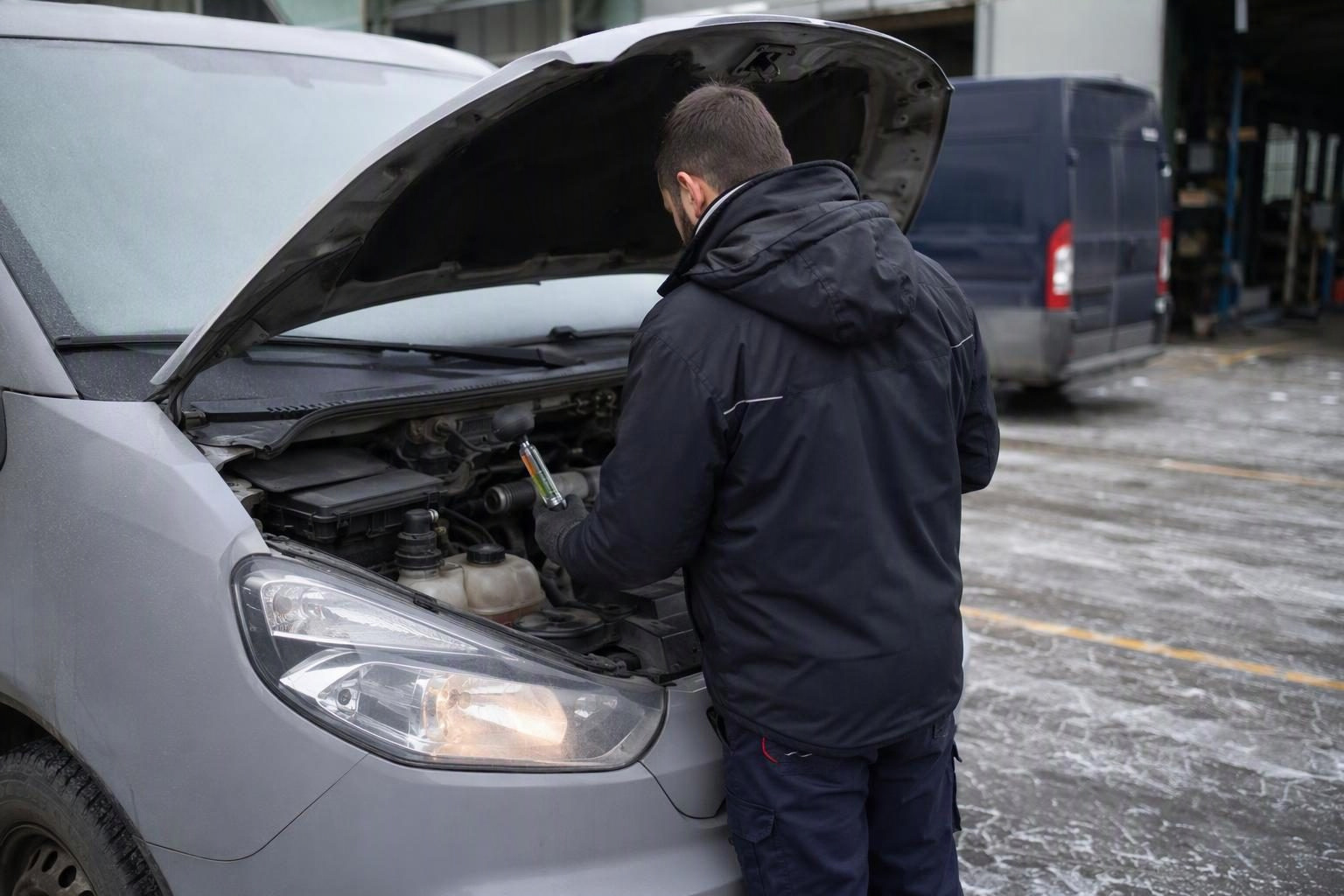
Coolant in vans before winter: planning a check of frost protection
Find out which vans need a pre-frost coolant check, how to interpret the test result and plan visits without unnecessary downtime.
Read article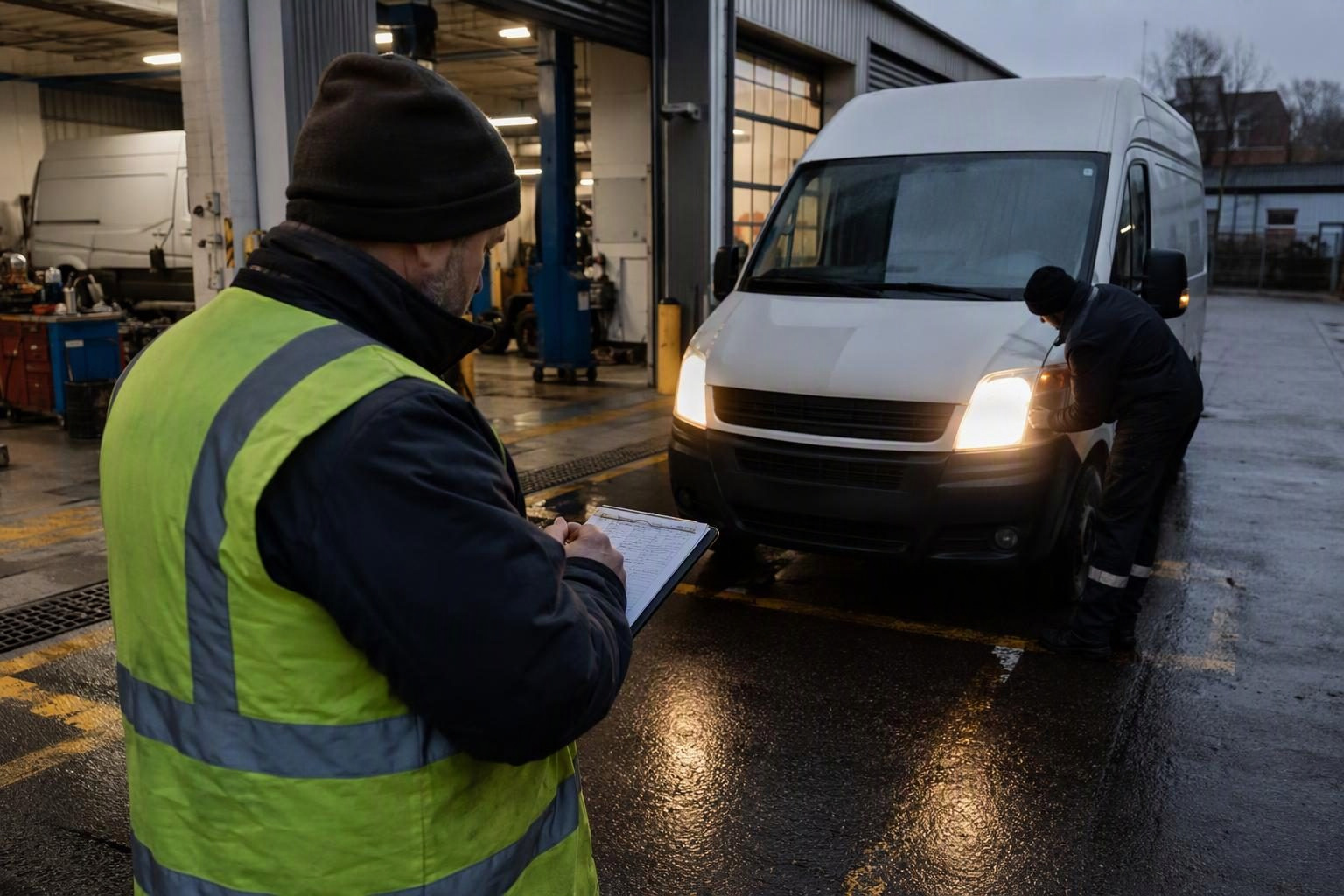
Lighting checks for a delivery fleet: how to plan inspections and repairs without unnecessary downtime
How to check company van lights, record faults and schedule measurements and repairs without taking several vehicles off the road at once.
Read article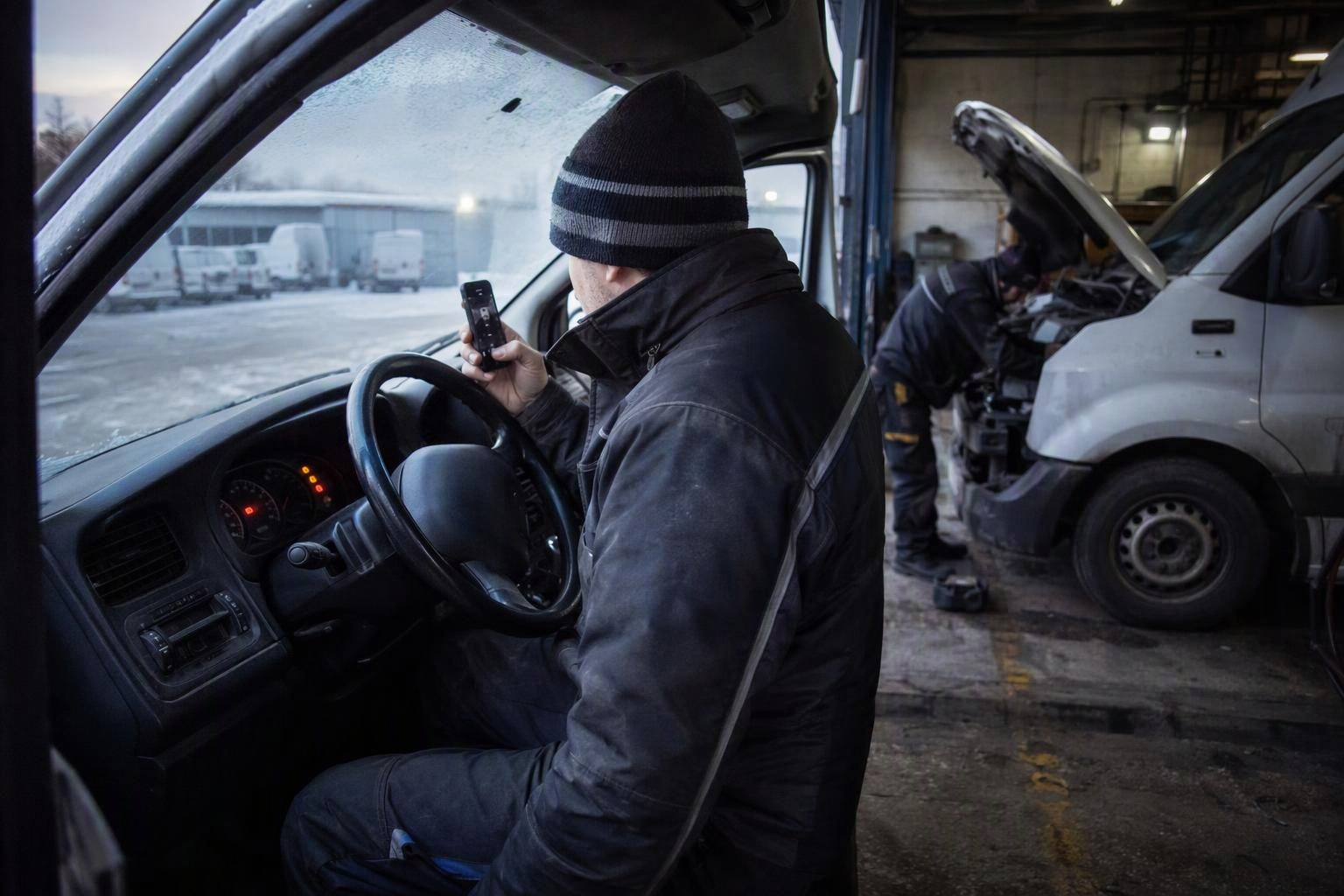
Diesel van will not start after an overnight frost: when to book fuel system diagnostics
Find out what symptoms to report, when to hold a van back from a trip and what the workshop should check in the fuel system.
Read article