
How should a company prepare for the temporary removal of a vehicle from service?
A breakdown, collision or theft is a disruption for a small fleet that interferes with company operations. An organized procedure, several reliable channels for access to a replacement vehicle and clear rules for financing will significantly reduce the time an employee is without transport.

First steps at the scene
If there are injured persons, serious damage, doubts about fault or a threat to safety - call 112 for medical assistance and the police. This is a priority that is not subject to company instructions.
The police publish simple guidelines on what to collect at the scene: photos, participants’ and witnesses’ details, registration numbers and insurance information. If the police attend, ask for the case number and a copy of the report or the contact details of the officer.
- Ensure safety: move the vehicle if possible and safe to do so.
- Take photos of the scene, vehicle damage and registration plates.
- Record drivers’ and owners’ details, insurance policy information and witness contacts.
- If there are injured persons or doubts about the circumstances - call the police and an ambulance via 112.
How to collect documents needed to report a claim
Complete documentation speeds up claim settlement and possible recovery of costs from the at-fault party. Prepare a standard set of documents that the employee will send after an incident.
Many steps can be automated: an email template to the insurer, a report form in the company system or a simple template file the driver fills in and sends.
- Photos of the scene and damage (several shots from different angles).
- Participants’ and witnesses’ details, registration numbers, vehicle makes/models.
- Police case number, if the police intervened.
- Policy details and the vehicle’s identifier in the company system (e.g. fleet number).
- A short description of the circumstances and a list of submitted documents.
Quick options to ensure mobility - comparison and practice
For a fleet of a few to a dozen vehicles the fastest solutions are those with pre-arranged channels: a replacement car via the policy/assistance, an agreement with a rental company, a short-term corporate vehicle pool or coordination with the workshop. It’s worth having several options because each suits different situations.
You can also use company-paid taxis/ride-hailing, send the employee by public transport or enable remote work if the tasks allow. The choice depends on task urgency and the cost of downtime.
- Replacement car from the policy/assistance - convenient, but coverage (number of days, vehicle class, type of damage) varies between policies.
- Corporate agreement with a rental company - faster service and agreed rates; it’s worth having a company account.
- Company pool (several company cars available on demand) - immediate mobility, but requires maintaining additional vehicles.
- Taxi/ride-hailing or public transport - good short-term options or when a replacement car is unavailable.
Insurance and contract clauses worth having or checking
Check policies and leasing/rental agreements in advance: is a replacement car included, how many days does the benefit cover, what vehicle class and what exclusions apply. Terms differ significantly between insurers and contracts, so do not rely on general assumptions.
In an agreement with a service center or workshop, clauses on quick repair authorization and replacement transport options are useful. A framework service agreement with a chosen workshop shortens formalities and speeds up repairs.
- Check the General Terms and Conditions of Insurance (OWU) for replacement car coverage: what is included and what the limits are.
- In the leasing/rental agreement look for clauses on assistance and replacement car - use them if available.
- Keep a list of workshops and a clause on repair cost authorization - who decides on costs and where to direct the vehicle.
Internal procedure: what to include to speed up decisions
A ready action card shortens decision time and reduces the number of calls. The procedure should be short, clear and available to the driver in the vehicle (e.g. sticker, plastic card in the glovebox) and on the intranet.
Designate a single person or a limited group of people authorized to approve expenses and repair decisions - the fewer people required to agree, the faster the resolution.
- Contact list: insurer/assistance, rental company, workshop, HR/ADM department, person authorized to approve costs.
- Claim report template (what and how to report, photo format, submission deadline).
- Rules for financing a replacement car: maximum daily limit, who authorizes an extended rental.
- Cost codes and fast accounting for mobility-related expenses.
- Authorizations to pick up/return a replacement car and to sign repair reports.
The role of telematics and data in a rapid response
If the company uses telematics (a device or tracking system), that data will help locate the vehicle, determine mileage and the circumstances of the incident and contact roadside assistance. This information speeds up the response and provides evidence for claim settlement.
Not every company needs a full system - it is enough to have location logging and a simple incident register available when reporting. It is important to know who and how will provide these data to the insurer or workshop.
- Vehicle location - quick dispatch of roadside assistance to the correct place.
- Route and event logs - helpful when describing the circumstances of the incident.
- Availability of data for claims - have a set method for passing telematics to the department responsible for claims.
Cost control and settlements
To limit expenses, set authorization thresholds (e.g. maximum daily rental cost) and maintain company accounts with rental firms at agreed rates. Fast accounting and assignment of cost codes will make later comparisons and cost recovery from the at-fault party easier.
Document all expenses related to replacement mobility and claim settlement. This will speed up accounting and any insurance claims.
- Company account with a rental company or a framework agreement - shorter formalities and better rates.
- Spending authorization thresholds - who and for how long can order costlier solutions.
- Cost codes for fast accounting of replacement car and repair expenses.
Training and practical elements in the vehicle
Simple driver training and checklists in the vehicle (e.g. a sticker with contact numbers and a short action guide) reduce the risk of procedural errors and speed up reporting a claim and arranging replacement mobility.
Regular reminders (email, quarterly meeting) keep the procedures fresh in mind and shorten reaction times in a crisis.
- Sticker in the vehicle with 3-5 contact numbers and a short checklist.
- Short training when the vehicle is issued and periodic reminders.
- Instructions on who is authorized to sign documents related to repair or rental.
Summary
For a small fleet the most important elements are: simple, pre-agreed channels for access to a replacement car; a clear, short internal procedure with a contact list and authorizations; a complete set of documents to report a claim; and agreements with workshops and rental companies that shorten formalities. Verify policy terms and contracts before a claim occurs - this will help avoid unnecessary stress and downtime. If you wish, you can start with a single action card to print for drivers and a list of 3-4 trusted partners (rental company, workshop, assistance) - this will materially reduce the time a vehicle is out of service.
More from the FleetPoint knowledge base
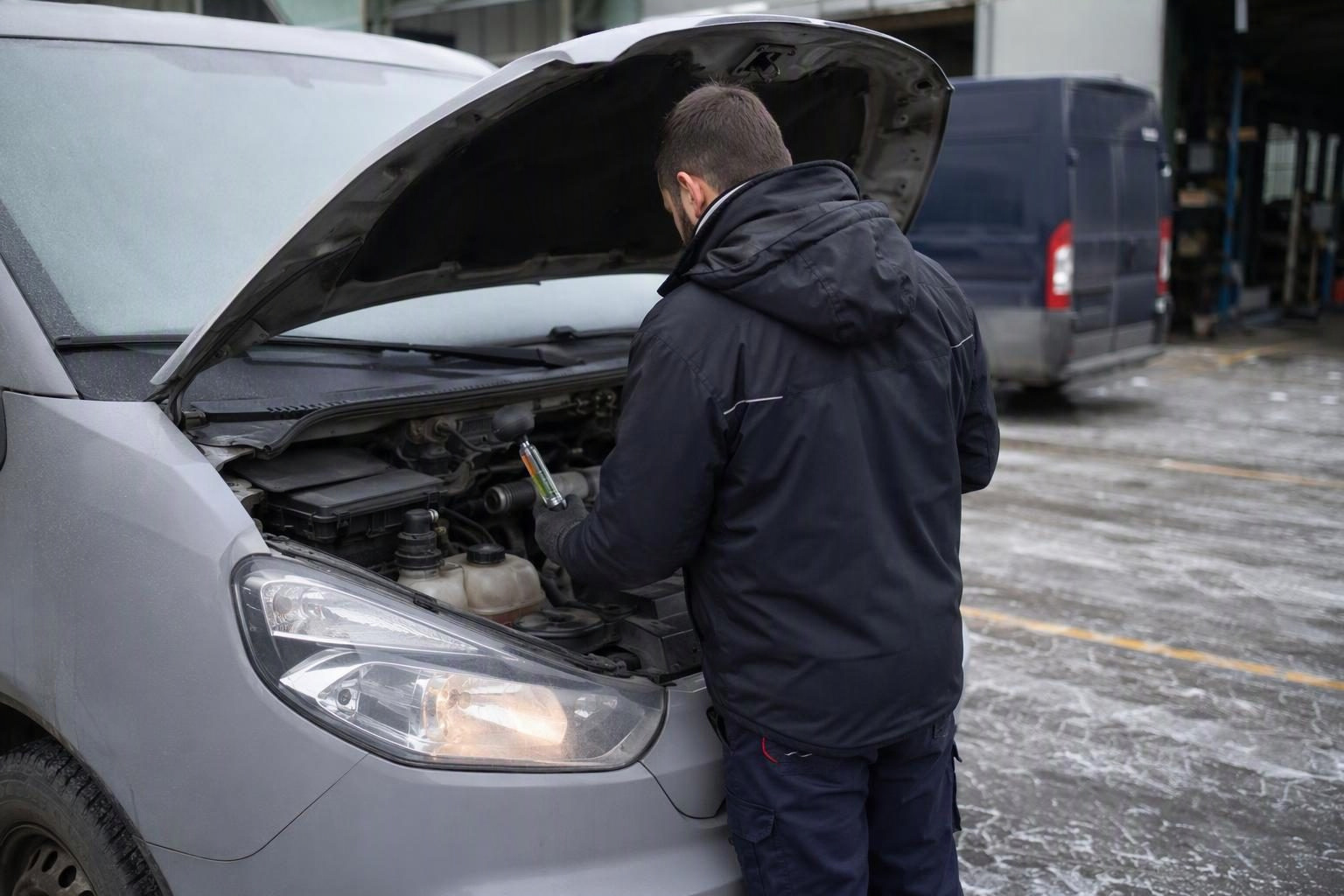
Coolant in vans before winter: planning a check of frost protection
Find out which vans need a pre-frost coolant check, how to interpret the test result and plan visits without unnecessary downtime.
Read article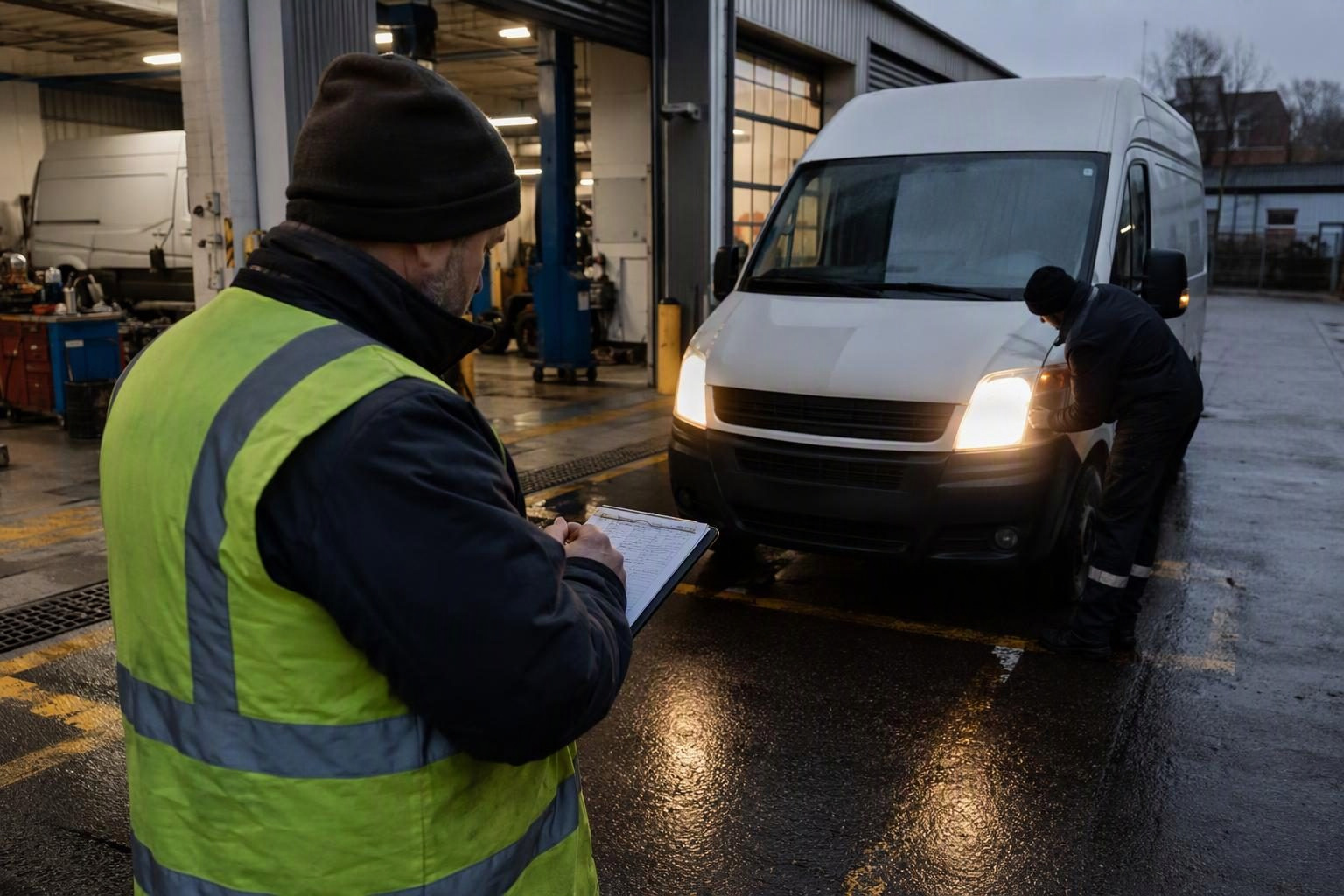
Lighting checks for a delivery fleet: how to plan inspections and repairs without unnecessary downtime
How to check company van lights, record faults and schedule measurements and repairs without taking several vehicles off the road at once.
Read article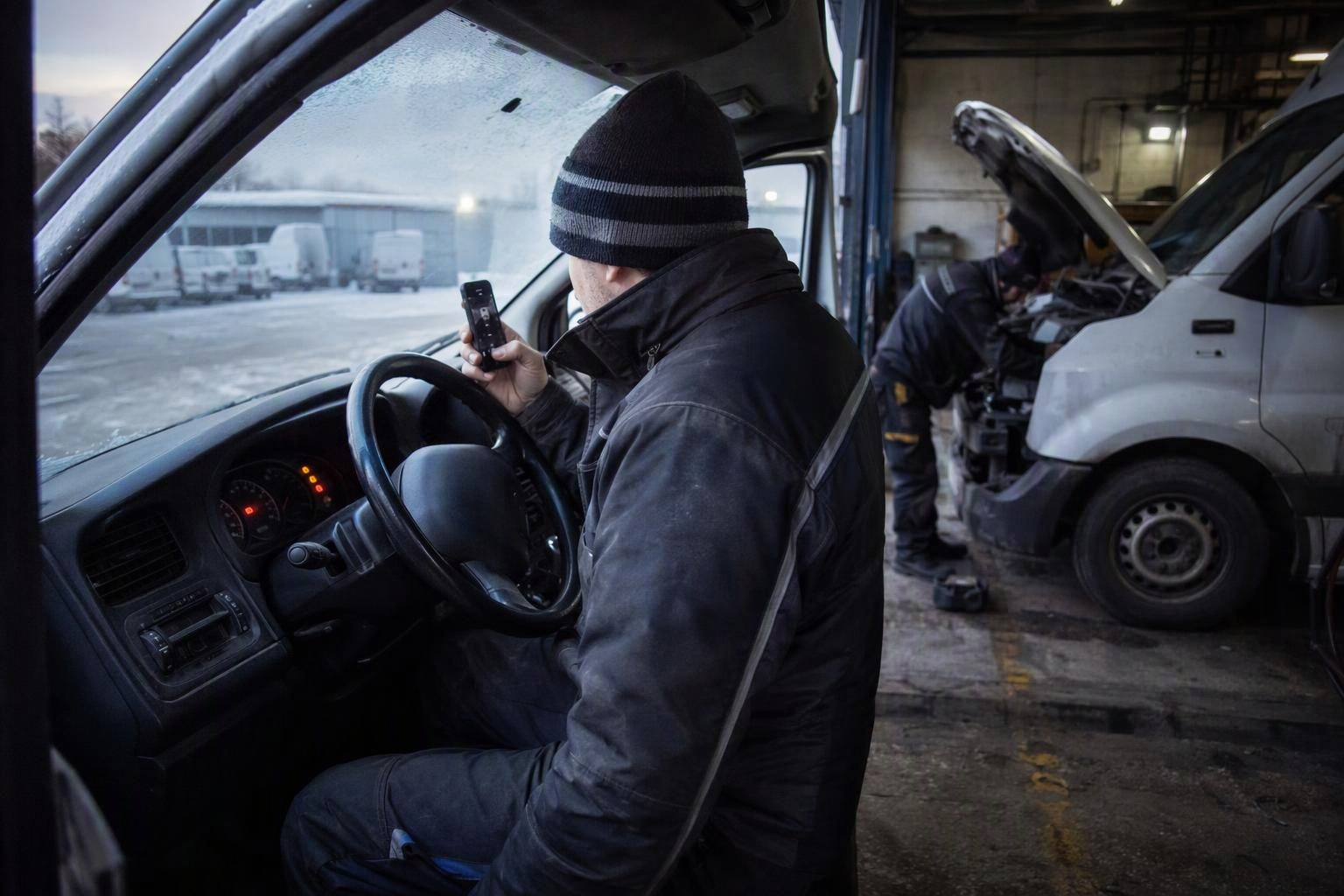
Diesel van will not start after an overnight frost: when to book fuel system diagnostics
Find out what symptoms to report, when to hold a van back from a trip and what the workshop should check in the fuel system.
Read article