
How to hand over a company car between drivers?
A formal and repeatable handover of a company car reduces disputes, simplifies settlements and improves fleet oversight. Below you will find a ready-to-implement process - before, during and after the handover - as well as a sample checklist and a description of roles.

Why have a formal handover process
The lack of a formal procedure increases the risk of disputes over damage, repair costs and liability. An orderly record reduces uncertainty and speeds up settlements.
Key pieces of evidence are the vehicle documentation, odometer reading and photos. Even simple practices - a checklist and signatures - significantly lower administrative costs during settlements.
- Reduction of disputes and claims by unambiguously recording the vehicle’s condition.
- Easier cost reporting and analysis of damage trends.
- Simplified coordination of service and insurance actions.
Preparation before the handover
The handover should start with preparing documents and tools. The administrator provides a form template (paper or digital), access to telematics and instructions on the vehicle use policy.
The handing-over driver should gather keys, fuel cards, a complete set of documents and inform about known damage and the history of refuellings/services.
- Check whether the registration certificate and the OC/SK policy are in the vehicle or available digitally.
- Prepare a device to take photos (smartphone) and the form to be completed.
- Schedule the handover with physical contact at the vehicle; if impossible - arrange a video meeting and real-time photographic documentation.
Handover: step by step (at the vehicle)
It is worth carrying out the handover at an agreed place and time, in daylight. Documentation made at the vehicle has the strongest evidential value.
Key actions are performed jointly: external and internal inspection, odometer reading, noting the fuel level, handing over keys and cards and taking photos.
- Take photos: front, rear, left and right side, interior (dashboard), odometer (showing the mileage) and close-ups of damage details.
- Record the tyre condition (tread, visible damage) and note minor scratches/chips. Do not perform repairs - only document them.
- Note the list of handed-over items: key set, spare keys, fuel card, manuals, equipment (vest, warning triangle).
- Signatures: both parties confirm in writing or electronically; if possible, add a witness or a video recording.
After the handover: settlements and administrative actions
After the physical handover the administrator should enter the data into the fleet management system and update driver permissions in the telematics.
Any discrepancies (hidden damage, missing documents) should be recorded immediately and, if necessary, reported to the claims procedure.
- Archive the form and photos linked to the vehicle’s VIN and registration number.
- Update mileage logs and schedule service if the inspection indicated the need for maintenance.
- If the handover was remote - attach the link to the recording/video and e‑mail confirmation from both parties.
Sample checklist and form fields
Keep the checklist limited to the most important fields so the process is quick and repeatable. It can be kept as paper or in a mobile app.
The list below is the minimal set of fields that should be included in every handover record.
- Date and time of handover
- Place of handover
- Details of the handing-over driver (first name, last name, company ID)
- Details of the receiving driver (first name, last name, company ID)
- Vehicle registration number and VIN
- Odometer reading (km), fuel level (e.g., 3/4), tyre condition
- Description of existing damage (brief notes)
- List of handed-over items (keys, fuel card, etc.)
- Attached photos (list of views) and link/file name
- Signatures of both parties (or electronic confirmation) and optional witness
Roles and responsibilities: who is responsible for what
The fleet administrator prepares tools, forms and training and provides telematics data. They are also obliged to update permissions and archive documentation.
Drivers are required to accurately record the vehicle’s condition, hand over all equipment items and cooperate during the inspection.
- Administrator responsibilities: form templates, access to telematics, handover reminders, document archive.
- Handing-over driver responsibilities: assemble documents and equipment, honestly describe damage, take photos.
- Receiving driver responsibilities: verify condition, document differences, report discrepancies immediately after takeover.
Digital tools and metrics to monitor
Telematics and form apps speed up the process (automatic mileage logs, reminders, photo storage). However, they do not replace physical body inspections.
It is worth monitoring a few simple metrics to measure the effectiveness of the procedure and detect operational problems.
- Suggested tools: a mobile app with a checklist, a fleet management system with photo archiving, a reminders module and an incident register.
- Metrics: percentage of handovers with complete documentation, time from handover reporting to archiving, number of disputes arising from lack of evidence.
- Good practices: tie the procedure to the vehicle use policy and include the handover in loan/use agreements when the user changes for a longer period.
Summary
A formal handover procedure for a company car is a relatively low organizational investment that pays off in fewer disputes and better cost control. Implement a short checklist form, document with photos and store everything in the system. Remember that the above recommendations are practical in nature - consult your legal department or the company insurer on legal and insurance matters.
More from the FleetPoint knowledge base
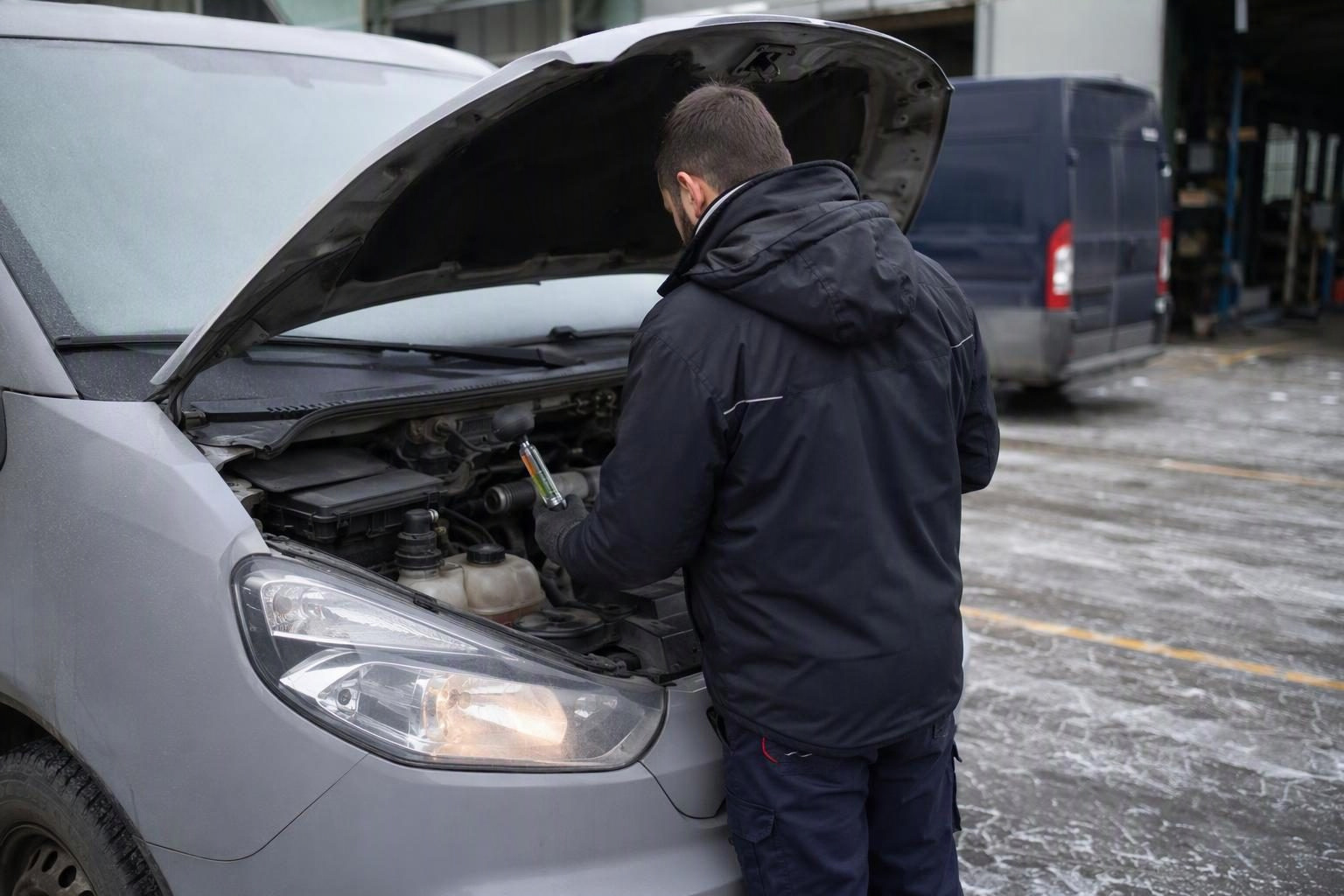
Coolant in vans before winter: planning a check of frost protection
Find out which vans need a pre-frost coolant check, how to interpret the test result and plan visits without unnecessary downtime.
Read article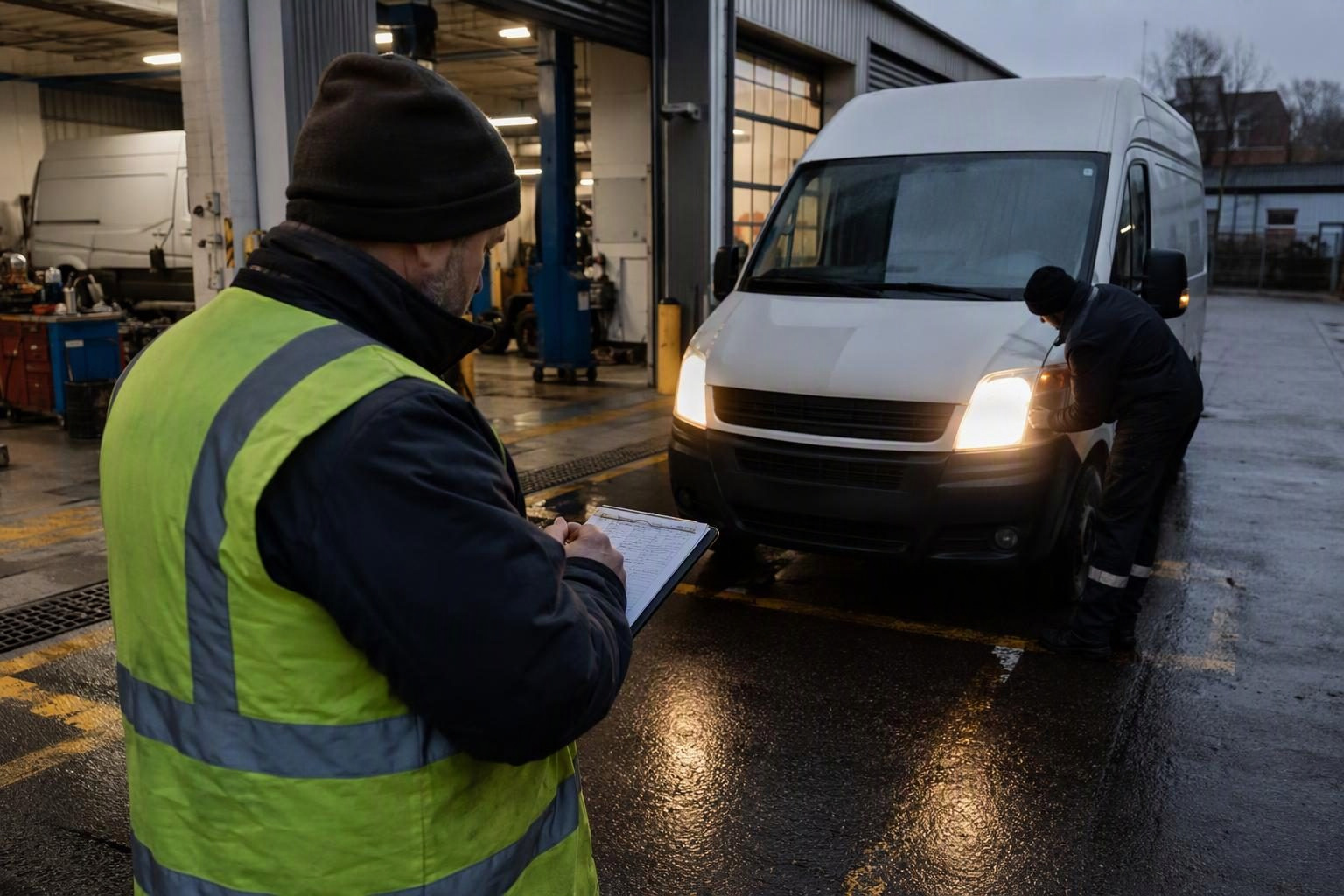
Lighting checks for a delivery fleet: how to plan inspections and repairs without unnecessary downtime
How to check company van lights, record faults and schedule measurements and repairs without taking several vehicles off the road at once.
Read article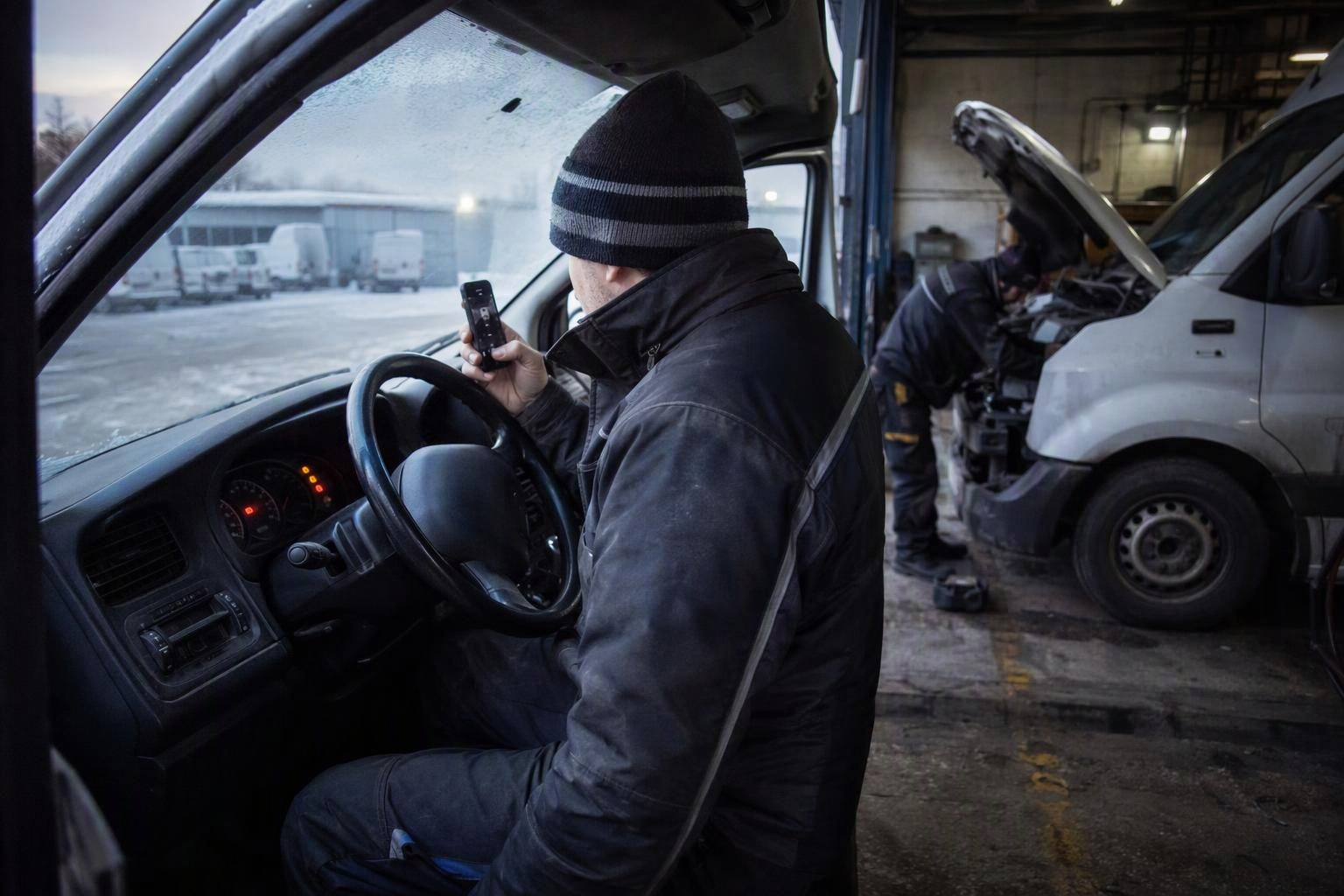
Diesel van will not start after an overnight frost: when to book fuel system diagnostics
Find out what symptoms to report, when to hold a van back from a trip and what the workshop should check in the fuel system.
Read article