
Monthly checklist for company cars - what should the fleet administrator check?
A monthly fleet check is not marketing - it is the cheapest form of prevention that increases safety, helps maintain regulatory compliance and shortens the time to return vehicles to service. This guide indicates what to check each month, who should do it and what actions to take in case of a problem.

Why a monthly check is necessary?
Regular, monthly verification is a compromise between cost and effectiveness: it is easier to detect developing faults, protect against fines and prevent longer downtimes.
Checks combine three layers: a quick “walkaround” by the driver, a telematics/OBD review by the administrator and verification of documents and the service schedule by the fleet coordinator.
A well-designed monthly process generates auditable records that are useful during roadside inspections, insurance claims and internal audits.
- Purpose: safety, availability, compliance
- Working model: driver + administrator + workshop
- Effect: shorter TTR (time to repair) and fewer unplanned costs
Driver: monthly “walkaround” - what and how to report
The basic and cheapest check is a quick inspection before and after a shift: the driver should report any concerning deviation immediately into the fleet system.
The walkaround includes checking items visible without tools - lighting, tires, windows, mirrors, visible leaks, emergency equipment and basic signs of bodywork damage.
Formalize the report: require a photo, a short description and a priority (urgent/scheduled). This simplifies the decision about immediate repair or sending the vehicle to the workshop.
- Check: all lights, indicators, windows and mirrors
- Check: visible leaks and the general condition of the bodywork
- Check: completeness of emergency equipment (triangle, vest, first aid kit)
Tires, lighting and PPE - safety priorities
The condition of tires and lighting directly affects safety and often results in fines. Monthly checks of pressure and tread condition reduce the risk of collisions and roadside breakdowns.
The cleanliness and functioning of lamps (high beam, low beam, brake, indicators) should be confirmed physically. Telematics helps detect blown bulbs, but cannot replace a visual assessment of cleanliness and fixture damage.
Emergency equipment (triangle, first aid kit, fire extinguisher where required) should be checked for completeness and expiry dates.
- Tires: pressure, evenness of wear, sidewall damage, tread depth
- Lights: operation, cleanliness, fixture sealing
- Equipment: completeness and expiry date (first aid kit, fire extinguisher)
Fluids, battery and brakes - what to check and when to escalate
Monthly verification of fluid levels (engine oil, coolant, brake fluid, windshield washer fluid) is a simple way to limit failures related to overheating or loss of operating parameters.
Monitor the battery and its condition (voltage, telematics reports of drops) after periods of low temperatures. If warning signs appear, schedule replacement at the workshop.
Brake: unusual noises, driver sensations and visible components (fluid, calipers, scoring) are signals for urgent diagnostics at a service - we do not recommend DIY repairs of the braking system.
- Check fluid levels monthly
- Monitor the battery telematically and physically
- Escalate to the workshop for deviations in brake performance
Tachographs, documents and legal requirements - compliance in practice
For vehicles subject to tachograph obligations, monthly checks of records, error reports and data downloads are a compliance standard. An inspector may demand records for the current day and the last 56 days - have a procedure for downloading and archiving.
Verify in the system the validity of technical inspections, OC (third-party liability insurance) and other required documents. In many cases the driver must carry documents while working - the fleet policy should enforce this.
Regulatory note: from 1 July 2026 changes concern intelligent tachographs and certain light commercial vehicles - plan updates to policies and training.
- Monthly read/confirmation of tachograph records
- Verification of technical inspection and insurance expiry dates
- Archiving and procedures for providing data during an inspection
Telematics, OBD and driver assessment - detecting trends
Monthly analysis of DTC/OBD faults and telematics alerts allows you to catch developing technical issues before they lead to a failure.
Fuel consumption reports and driver behavior (hard braking, acceleration, speeding) form the basis of coaching programs. Short, monthly feedback sessions change habits more effectively than sporadic interventions.
Use telematics as decision support - not as the sole source. Physical inspection and service data complete the picture.
- Monthly analysis of DTC/OBD and telematics alerts
- Comparison of fuel consumption and trends across vehicle groups
- Monthly feedback for drivers based on the data
Service management, spare parts and the inspection register
Review of upcoming periodic inspections and the PM calendar should be an integral part of the fleet administrator’s monthly report. Delays increase the risk of failures and technical infringements.
Maintain a stock of critical parts (bulbs, fuses, spare tool/repair wheel) and a list of parts specific to the models in the fleet. Monthly replenishment and inventory checks minimize downtime.
Every check must have an auditable entry: who, when, what was checked, what faults were found and what actions were taken. This is evidence of preventive action during an external inspection or an insurance dispute.
- Monthly review of the PM schedule and confirmations of completion
- Control and replenishment of the stock of critical parts
- Auditable register of all reports and actions
Summary
Implementing a monthly checklist is a simple and effective fleet management tool. Prioritize the driver as the first line of detection, supplement telematics and OBD data with administrator analyses, and keep an auditable register and service calendar. Put procedures in place for downloading tachograph records and update policies according to legal changes (including tachograph changes in 2026). If you need support implementing processes or coordinating repairs, fleet management, repair coordination and cost reporting services are available to help maintain high vehicle availability.
More from the FleetPoint knowledge base
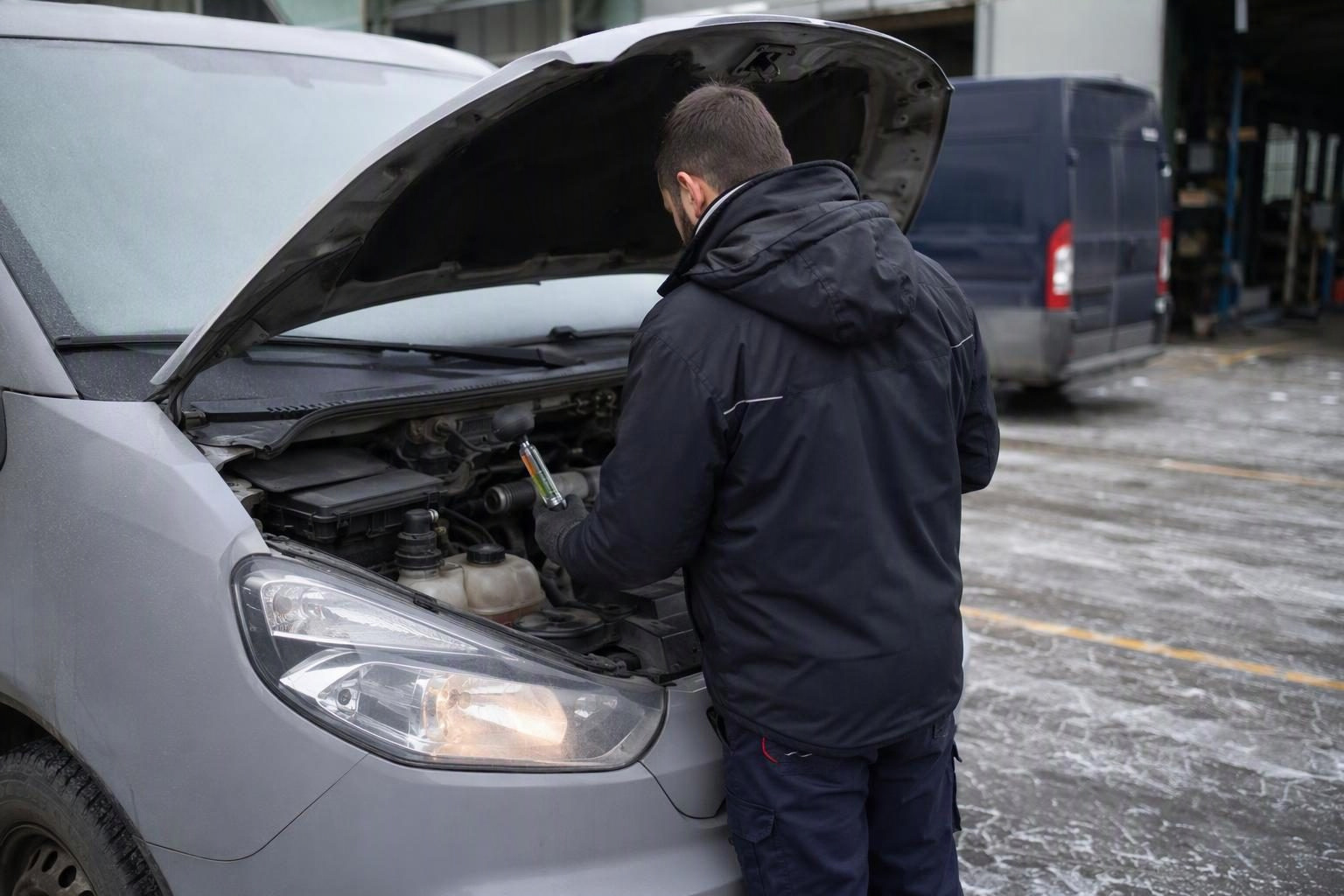
Coolant in vans before winter: planning a check of frost protection
Find out which vans need a pre-frost coolant check, how to interpret the test result and plan visits without unnecessary downtime.
Read article
Lighting checks for a delivery fleet: how to plan inspections and repairs without unnecessary downtime
How to check company van lights, record faults and schedule measurements and repairs without taking several vehicles off the road at once.
Read article
Diesel van will not start after an overnight frost: when to book fuel system diagnostics
Find out what symptoms to report, when to hold a van back from a trip and what the workshop should check in the fuel system.
Read article