
Damage noticed when handing over a company car - how to document it?
A short checklist for the driver and fleet administrator: what to record and photograph when handing over a car, how to secure documentation in line with RODO and which information to prepare for a claim notification.
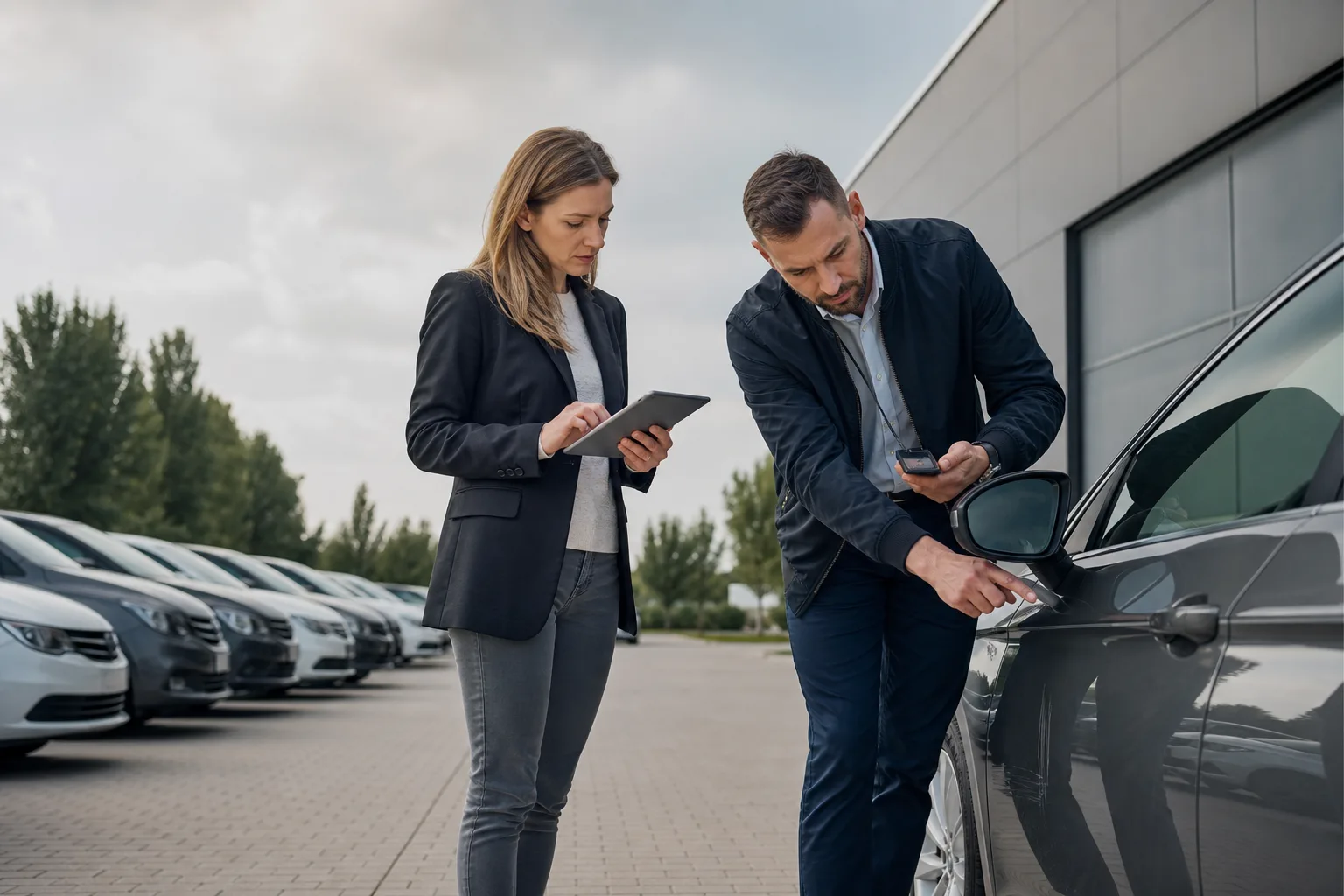
Why correct documentation matters
When handing over a company car it pays to be careful: the notes and photos taken at the handover will be evidence of the vehicle’s condition and can simplify matters if a complaint, financial liability or insurer claim arises.
Lack of a reliable protocol makes it difficult to determine whether damage occurred before or after the handover. Documentation protects both the company and the driver.
What must be included in the handover protocol
The protocol should unambiguously identify the vehicle and the parties involved in the handover - this is the basic minimum.
Concise and legible information will ease later administrative actions and the claims process.
- vehicle identification: make/model, registration number, VIN (if available), insurance policy number;
- parties’ details: full name of the person handing over and the person receiving, or their positions, date and exact time of handover, signatures of both parties;
- odometer reading and fuel level;
- complete set of keys and equipment: spare wheel, first-aid kit, warning triangle, tools - note what is missing;
- description of damage: location (e.g. rear bumper, left fender), approximate size (e.g. 10 cm scratch), whether it affects usability (e.g. cracked windshield, leak);
- witnesses and circumstances: who saw the damage, where the car was parked (street, company parking lot), weather conditions if relevant.
How to photograph damage so photos have evidential value
Photos often resolve disputes. Take a series of shots: general views of the car and close-ups of each damaged area.
Keep the original files from the phone camera - they contain metadata (date, time, sometimes coordinates) that insurers and service centers find useful.
- general shot: the car photographed at a diagonal with both sides visible - shows context and placement of damage;
- close-ups of damage: several photos from different angles to show shape and depth of the damage;
- photo of the odometer: a clear image of the mileage reading;
- photo of the registration document: opened registration certificate or vehicle card (karta pojazdu) if required by the insurer;
- add a scale: a hand, ruler or another object next to the damage helps estimate size;
- name files descriptively and keep originals: e.g. ‘2026-09-02_AB1234_front_right_scratch.jpg’;
- take photos in good light, avoid reflections and filters; take at least 2-3 shots of each spot.
Personal data and RODO - what you need to know
A vehicle’s registration number, VIN, and sometimes a photo of a person can be treated as personal data if they allow identification of a specific individual. In practice it is safer to assume such information is subject to data protection rules.
The company, as the documentation controller, should define the legal basis for processing (e.g. performance of contractual obligations or the company’s legitimate interest), restrict access to the files and set a retention period.
- storage: secure files (password-protected accounts, disk/cloud encryption), limit access to those responsible for claims handling;
- retention: keep documents only as long as necessary for settlement and potential claims (ensure the period complies with regulations and internal policy);
- notification: depending on the situation the data subject may need to be informed - the company’s data protection policy should regulate this;
- publication: do not publish photos from the incident on social media until you are sure you are not disclosing personal data.
Claim notification - what to prepare for the insurer and when to call the police
When notifying the insurer, prepare a complete set of information and documents. Insurers usually require these elements, and lacking them can delay claim settlement.
Call the police whenever there are injuries, you suspect a crime, the at-fault party has left the scene, or you want an official report.
- information for notification: policy number, registration number and VIN, date and time of the incident, location and a brief description of the event;
- documents and materials: general and close-up photos, odometer photo, witness details, perpetrator’s statement (if recorded), police report (if police attended);
- notification channels: use the insurer’s official channels (form, portal, designated e‑mail) and keep copies of sent files;
- check the OWU: reporting deadlines and required documents vary between policies - check the terms of your policy.
How to organize an internal procedure in a small company
Set clear rules: who completes the protocol, who takes the photos, who notifies the insurer and within what timeframe. A short instruction reduces errors and speeds up handling.
Store documents in a single, easily accessible but secure location; maintain a simple incident register so you can quickly find the history for a particular vehicle.
- appoint responsible persons and backups;
- design a simple protocol template and a file-naming convention;
- make backups of documents and photos and review access permissions;
- run a short training for drivers: what to record, which photos to take, when to call the police.
Disputed situations and good practices
If there is a dispute about when the damage occurred, witnesses and a photo documenting the moment of handover are useful. A note signed by both parties has significant evidential weight.
Do not carry out repairs immediately without the company’s or insurer’s consent if this could affect establishing the cause of the damage - when in doubt, consult the person responsible for the fleet.
- keep originals: do not send only screenshots if the insurer requests originals;
- if the case is disputed or involves injuries - consider consulting a lawyer or HR/safety department;
- avoid public sharing of photos and documents related to the incident.
Summary
A simple, repeatable documentation method saves time and reduces the risk of disputes. Adopt a short protocol template, take photos according to the checklist, secure files and report the claim in line with the OWU. If you need help with claim handling or coordinating repairs, you can use specialist services (e.g. claims handling, repair coordination, fleet servicing).
More from the FleetPoint knowledge base
Coolant in vans before winter: planning a check of frost protection
Find out which vans need a pre-frost coolant check, how to interpret the test result and plan visits without unnecessary downtime.
Read article
Lighting checks for a delivery fleet: how to plan inspections and repairs without unnecessary downtime
How to check company van lights, record faults and schedule measurements and repairs without taking several vehicles off the road at once.
Read article
Diesel van will not start after an overnight frost: when to book fuel system diagnostics
Find out what symptoms to report, when to hold a van back from a trip and what the workshop should check in the fuel system.
Read article