
Replacement vehicle after a third-party liability claim: how to choose a vehicle and justify the rental period
After a collision, report the claim and your need for a replacement vehicle at the same time. Do not wait until the inspection is complete. Choose a vehicle that can perform the essential functions of the damaged vehicle, check the full rental cost, and keep a record from the outset of the repair process or your search for a vehicle after a total loss. Reimbursement under the at-fault party's third-party liability insurance does not automatically mean that any rate or a fixed number of rental days will be covered. Your company should be able to show why the rental was necessary and that the vehicle class, cost, and rental period matched its actual business needs.
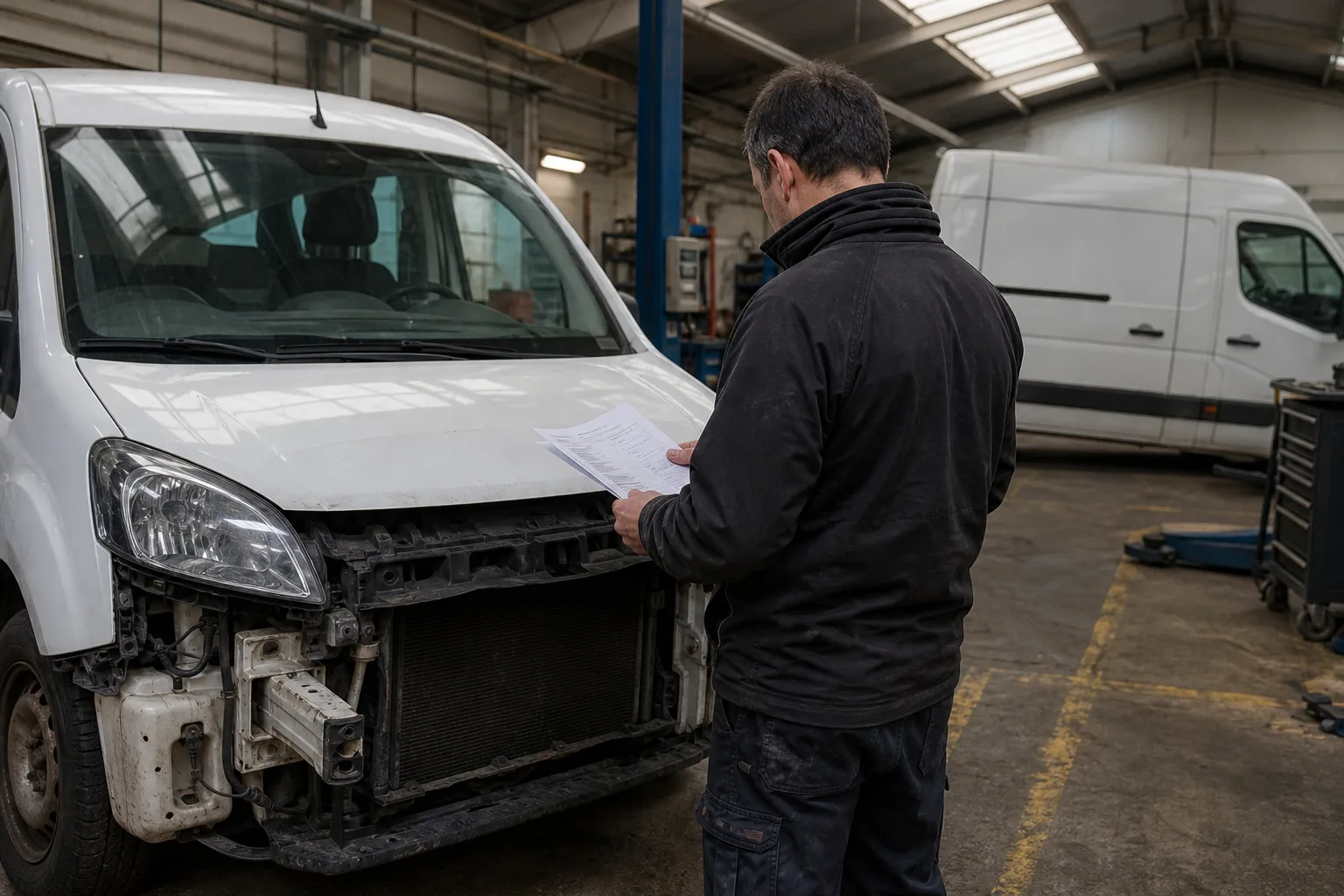
Arrange the rental at the same time as reporting the claim
If the damaged vehicle cannot be used safely or for its intended purpose, notify the insurer immediately that you need a replacement vehicle. Provide the claim number, vehicle details, its location, and a brief description of the tasks the company uses it for. You do not have to wait for a final decision before arranging a rental, but keep documents confirming the costs and the need to use the vehicle.
The insurer may offer a vehicle from its preferred rental company. Ask for the offer in writing and check whether a suitable vehicle is actually available and whether the offer covers all costs of providing it. Compare not only the daily rate but also the deposit, excess, mileage limit, delivery and collection, and mandatory fees. If the offer does not meet your company’s needs, keep a copy and explain specifically what it lacks.
Do not assume that every price and rental option will be reimbursed. The cost must be necessary and economically justified, and the expense must result from being unable to use the damaged vehicle. There is no single rate or statutory number of days that automatically applies in every case.
- Record the claim number, insurer details, and contact information for the person handling the case.
- Report your need for a replacement vehicle and ask for the terms of any offer from the insurer in writing.
- Keep the rental agreement, vehicle handover report, invoices, and the return report.
Choose a vehicle based on its tasks, not just its class name
A replacement vehicle should match the damaged vehicle in the respects that matter. For a passenger car, its class, number of seats, and condition may be relevant. For a van, the class name alone is not enough. Record the features needed to carry out the company’s work: body type and conversion, cargo space, payload, number of seats, and equipment required for the job.
You do not have to look for an identical model, but show why a smaller vehicle could not perform the same tasks. Useful evidence includes the vehicle registration document or technical data for the damaged vehicle, a description of its equipment, and examples of the routes, deliveries, or services the company carries out. If the vehicle transports tools or a particular type of cargo, describe this clearly instead of simply saying that it is needed for business.
If the insurer offers a vehicle with less capacity, or a more expensive rental option is necessary for a specific reason, explain the difference before signing the agreement, if circumstances allow. If the need is urgent, document why you could not wait for another offer. Driver convenience or preference alone may be a weaker justification than the requirements of a particular job.
- Compare the number of seats, conversion, cargo space, and specifications relevant to the work.
- Record why an available vehicle with less capacity cannot replace the damaged one.
- If the company has a spare vehicle, explain whether it was available and whether it could perform the same tasks.
Before signing the agreement, check who bears the risk of additional charges
Read the agreement before handing the keys to the driver. For a cashless rental, pay particular attention to the assignment of the claim and any clause covering costs the insurer does not accept. The fact that the rental company settles directly with the insurer does not always mean that your company will not have to pay anything extra.
Check the rate, deposit, excess, mileage limit, refuelling rules, delivery and collection fees, and terms for returning the vehicle early. Also establish how to notify the rental company when the vehicle has been repaired or the company has bought a vehicle after a total loss. Ask for handover documents describing the vehicle’s condition and equipment.
If the insurer offers an equivalent vehicle but the company still chooses a more expensive rental, you may need to demonstrate a specific reason for the higher cost. Compare offers on the same basis, taking into account the full cost and actual availability, not just the daily rate.
- Confirm in writing whether the company is liable for any costs not covered by the insurer.
- Check additional fees and whether the rental can be ended promptly when it is no longer needed.
- Keep the insurer’s offer and your response explaining your choice.
Document the rental period day by day
There is no fixed number of days that applies to every claim. For partial damage, the actual repair process and the period during which the vehicle was unavailable are what matter. The cost may also cover an extended repair, provided the delay was not caused by circumstances for which the injured party or a third party is responsible. For this reason, a workshop’s confirmation of the vehicle’s arrival and collection dates may not be enough on its own.
Ask the workshop to confirm key dates and keep all correspondence. Collect information about inspections, diagnosis, estimates, ordering and delivery of parts, the start of work, and when the vehicle is ready for collection. If there was an interruption, ask the workshop to state its reason. Once the vehicle is ready, do not delay collection without justification, and end the rental when the replacement vehicle is no longer needed.
For a total loss, keep the date you received information about the settlement method, correspondence with the insurer, documents showing your search for and purchase of another vehicle, and the date the replacement vehicle was returned. The time needed to acquire a vehicle is assessed based on the circumstances of each case. The compensation payment date alone does not automatically mark the end of a justified rental period.
- Create a brief timeline showing the date, event, and supporting document.
- Record the reasons for repair downtime and delays beyond the company’s control.
- Note when the damaged vehicle was ready for collection or when the company acquired another vehicle.
Prepare a complete set of documents for settlement with the insurer
When submitting your claim, include documents that make it easy to understand both the cost and the need for the rental. For a business, a brief explanation can help: what the company does, what the damaged vehicle was used for, why no suitable replacement was available, and what tasks the replacement vehicle performed. This does not replace invoices or repair records, but it brings them together in a clear account.
If the insurer disputes the rate or rental period, ask it to identify the specific items in question and the basis for its position. Respond with supporting documents: a comparison of available offers, a repair timeline, a description of the vehicle’s specifications, and evidence of the jobs it was used for. A general statement that the company needed the vehicle may not explain why that particular class and rental period were justified.
Pass the invoice to your accounting department and confirm how much VAT the company can deduct. The amount that can be claimed may depend on the right to deduct VAT, so do not assume that every company is entitled to reimbursement of the full gross amount. An accountant or tax adviser should confirm the rules for the specific vehicle and how it is used.
- The claim number, incident records, and details of the damaged vehicle.
- The rental agreement, vehicle handover and return reports, and invoices or receipts.
- Repair records or documents relating to the purchase of a vehicle after a total loss.
- An explanation of the company’s needs and examples of jobs, routes, or deliveries.
- Information for the accounting department about how VAT is to be accounted for.
Summary
Create a single timeline for the claim and add dates, events, and supporting documents to it. Share it among the driver, workshop, and fleet administrator so that all the relevant information is available when the rental is settled.
More from the FleetPoint knowledge base
Coolant in vans before winter: planning a check of frost protection
Find out which vans need a pre-frost coolant check, how to interpret the test result and plan visits without unnecessary downtime.
Read article
Lighting checks for a delivery fleet: how to plan inspections and repairs without unnecessary downtime
How to check company van lights, record faults and schedule measurements and repairs without taking several vehicles off the road at once.
Read article
Diesel van will not start after an overnight frost: when to book fuel system diagnostics
Find out what symptoms to report, when to hold a van back from a trip and what the workshop should check in the fuel system.
Read article