
What should a driver check before starting a trip in a company car?
Before every business trip perform quick, systematic checks - it’s a simple way to reduce the risk of breakdowns, insurance issues and costly stops. Below you will find a practical list of items to check and what to document when something is wrong.

Quick external checks and basic safety
Before you get in, walk around the vehicle and do a brief visual inspection. Look for leaks, visible body damage, cracked windows and loose parts that could endanger safety or expose the company to costs.
If you notice signs of a collision, dents or broken glass - take photos and note the location and time. Such documentation makes it easier to report to the fleet department and the insurer.
- Inspect the undercarriage and wheel areas for oil/fluid stains.
- Check that windows, mirrors and headlights are intact and clean.
- Make sure doors and locks operate correctly.
Lights, wipers, horn - checks after starting the engine
After starting the engine, check the operation of all exterior lights (low beam, brake, parking, turn signals) and the horn. Non-functioning lights are a common cause of fines and a hazard on the road.
Check the wiper performance and the windshield washer fluid level - especially before leaving town or when the weather is uncertain.
- Switch on the low beam and turn signals - confirm visibility and signaling.
- Check the wipers dry - incomplete water clearing means blades need replacing or fluid refilling.
- Test the horn and hazard lights briefly so as not to create a traffic hazard.
Tyres: pressure, tread and spare
Tyres are the component that most affects safety and fuel consumption. Check pressure according to the manufacturer’s recommendations (sticker on the door or the manual). Underinflation and overloading increase the risk of damage and failure.
Pay attention to tread depth and visible sidewall damage. The legal minimum tread depth is 1.6 mm, but for safety it is recommended to replace tyres earlier.
- Check tyre pressure and tread condition on all wheels and on the spare tyre or repair kit.
- Look for cracks, bulges and embedded objects - if present, take photos and report.
- For delivery/vans, check load and tyre condition according to fleet recommendations.
Operating fluids and dashboard warning lights
Monitor levels of basic fluids: engine oil, coolant, brake fluid and windshield washer fluid. Inspect under the vehicle for leaks before a long trip.
After starting the engine, read the dashboard warning lights. Any illuminated warning light (e.g. oil pressure, temperature, brakes, ABS, check engine) requires reporting - it should not be ignored before a longer trip.
- Check the warning lights at engine start and after a short warm-up drive.
- If a critical light is on, report it to the fleet service and wait for instructions.
- Note suspicious leaks (location, fluid color) and attach photos to the report.
Documents, authorizations and mandatory equipment
Carry required documents: driving licence, vehicle registration document and proof of insurance (paper or in the mObywatel app). In company vehicles also carry required business documents: route card, authorizations and fuel card if used.
A homologated warning triangle must be present in the vehicle. A fire extinguisher, first aid kit and reflective vest are recommended and are often required in practice - check the fire extinguisher’s expiry date.
- Driver’s licence and vehicle registration document always accessible.
- OC insurance and the possible “zielona karta” (Green Card) for trips abroad - check before departure.
- Check for the presence of a triangle, fire extinguisher, first aid kit and reflective vest; verify the fire extinguisher’s expiry date.
Vehicle handover/return procedure and reporting irregularities
Follow internal fleet procedures: document vehicle handover and return in the route card or system - note the time, odometer reading and fuel level and provide a short description of the technical condition.
If defects, damage, leaks or missing equipment are detected: take photos, note the location and time, send a report to the fleet/service department and, if necessary, to the insurer or the Police.
- Record the odometer reading and fuel level when taking/returning the vehicle.
- Document damage with photos and description - lack of documentation hinders claims handling.
- Report failures immediately; do not continue a long trip with a critical warning light on.
Additional notes: heavier vehicles and international trips
Drivers of heavier vehicles also check qualifications (carriage of goods/passengers), the tachograph and compliance of working time with regulations. ITD (Inspekcja Transportu Drogowego) inspects these elements - errors affect safety and the company’s liability.
For international trips pay attention to differences in equipment requirements (e.g. reflective vests, first aid kits, fire extinguishers) and the need to have a zielona karta (Green Card) insurance. Before traveling, check the requirements of the destination country.
- Check validity of qualifications and correct entries in the tachograph for commercial vehicles.
- For international routes verify required equipment and insurance documents.
- Ensure the load complies with permissible parameters for commercial vehicles.
Summary
A short pre-trip routine minimizes the risk of breakdowns, fines and problems with claims settlement. Regular checking of lights, tyres, fluids, warning lights and carrying required documents and equipment should be a standard for every company driver. In case of irregularities document the vehicle’s condition (photos, location, time) and report immediately to the fleet department or service - this speeds up repairs and facilitates claims handling.
More from the FleetPoint knowledge base
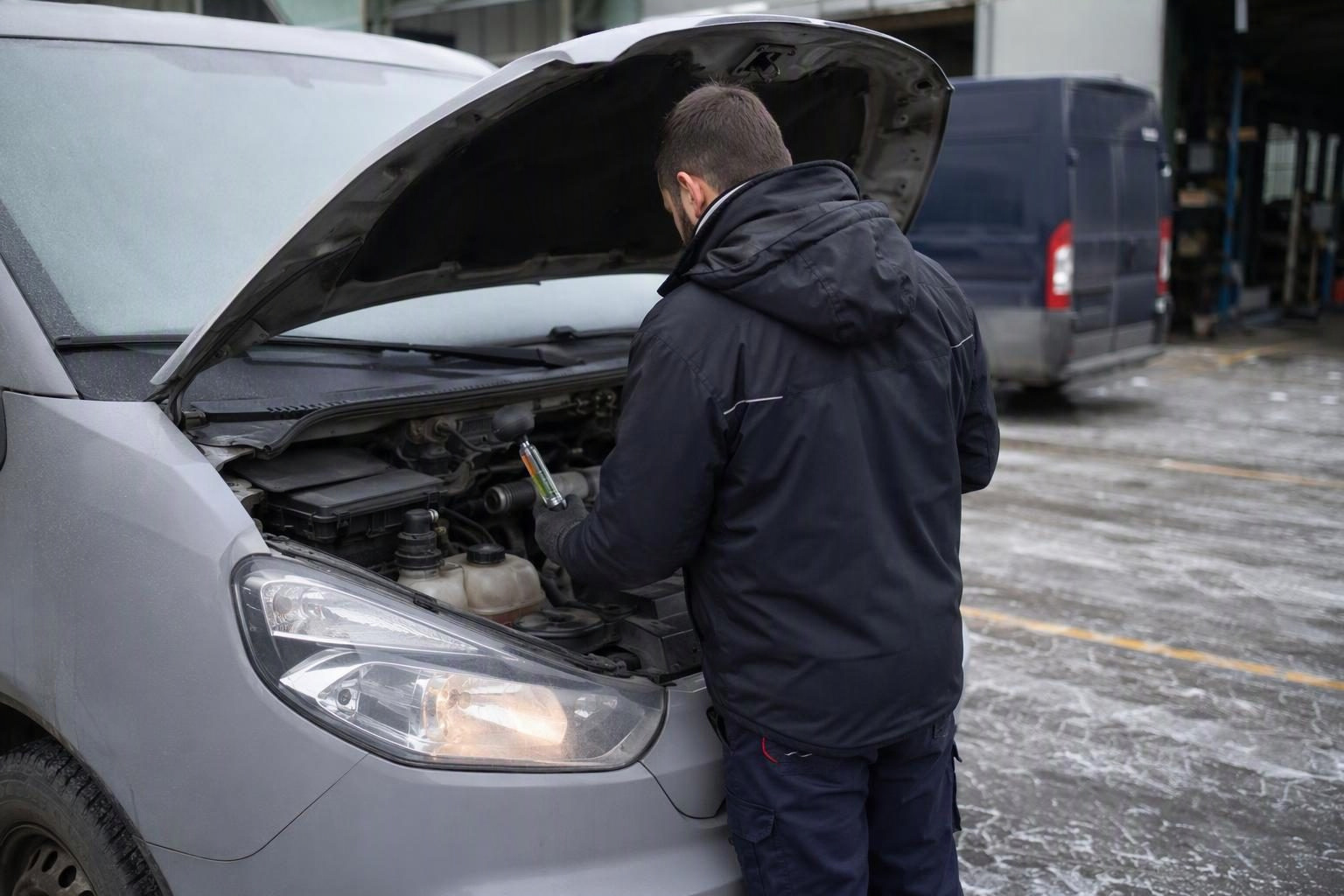
Coolant in vans before winter: planning a check of frost protection
Find out which vans need a pre-frost coolant check, how to interpret the test result and plan visits without unnecessary downtime.
Read article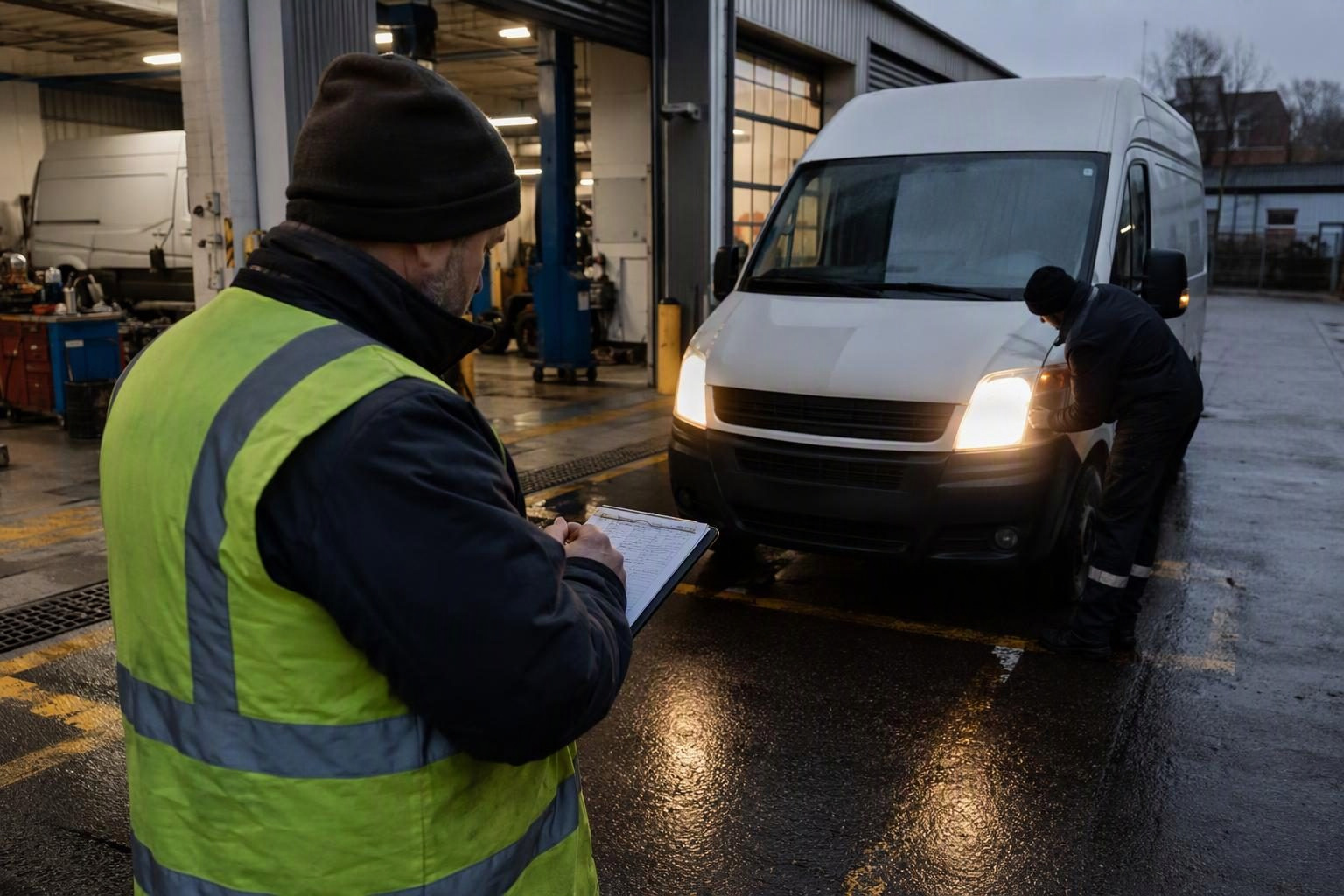
Lighting checks for a delivery fleet: how to plan inspections and repairs without unnecessary downtime
How to check company van lights, record faults and schedule measurements and repairs without taking several vehicles off the road at once.
Read article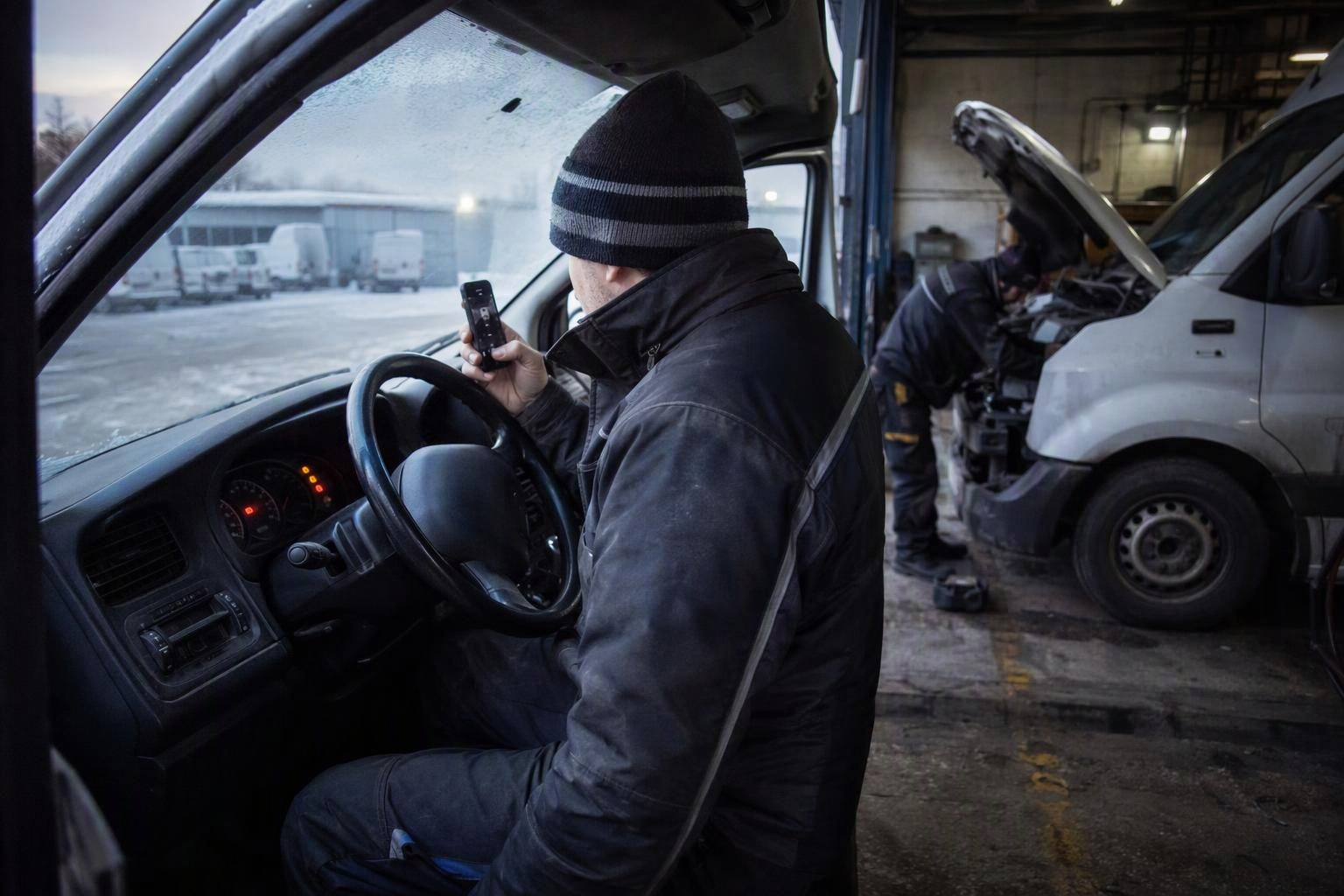
Diesel van will not start after an overnight frost: when to book fuel system diagnostics
Find out what symptoms to report, when to hold a van back from a trip and what the workshop should check in the fuel system.
Read article