
Total Loss of a Company Car: How to Settle the Claim and Keep Operations Running
After a total loss decision, do not accept the transfer amount without checking it. Request the full calculation, review the vehicle's pre-incident value and the salvage value separately, and arrange a work vehicle at the same time. The settlement method depends on whether you are claiming under the at-fault party's OC (Polish third-party liability motor insurance) or your own AC (Polish own-damage motor insurance). In your company, appoint one person to manage the case and start recording downtime and rental costs from the outset.
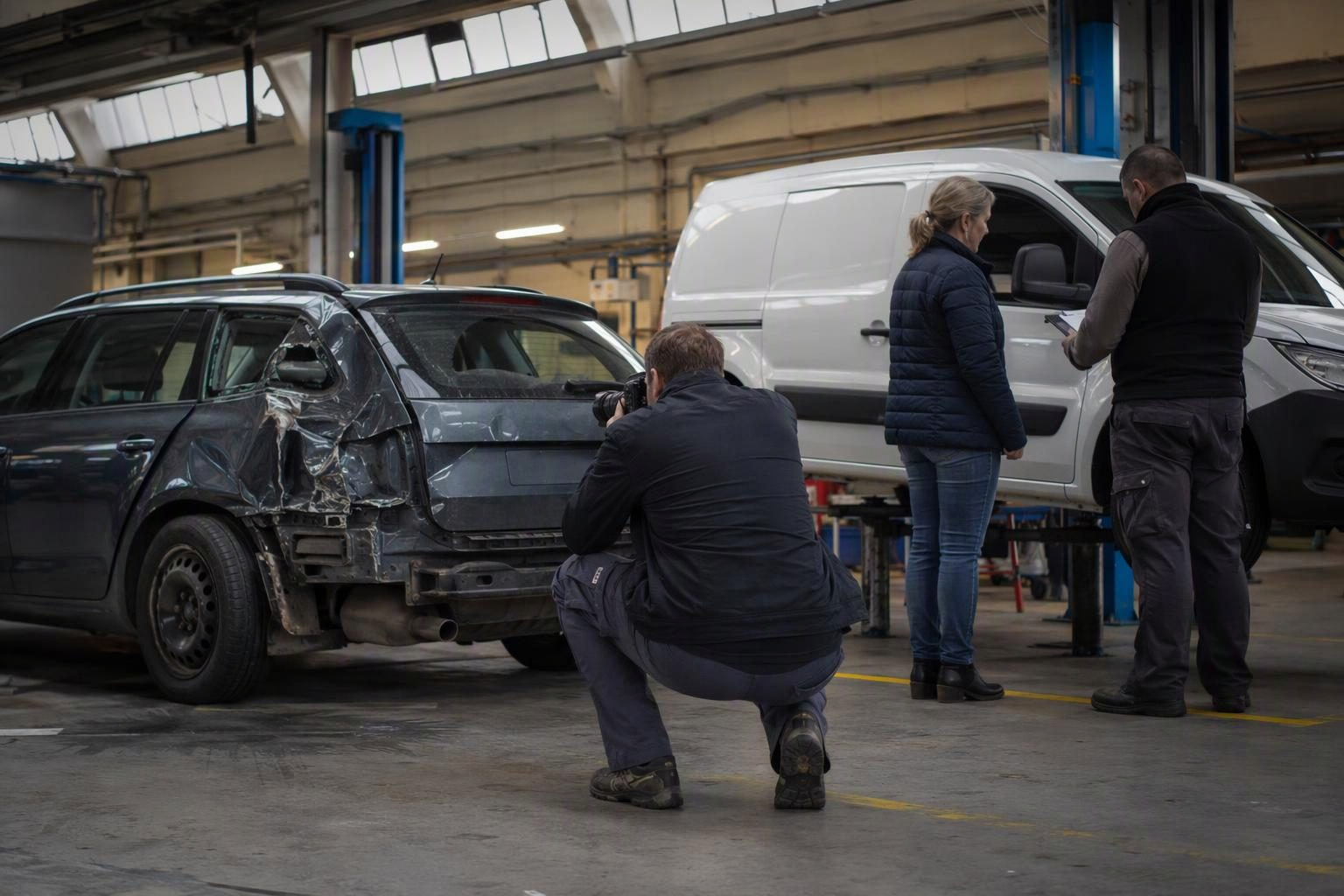
First, establish which policy is being used to handle the claim
Ask the insurer for its decision in writing and check whether the claim is being handled under the at-fault party’s OC or your company’s AC. Do not apply the rules of one policy to the other. In a typical OC claim, a total loss occurs in practice when the reasonable anticipated repair cost exceeds the vehicle’s market value before the incident. Under AC, the terms of the specific contract and the OWU (Polish general insurance terms and conditions) determine the outcome. The often-cited 70% threshold is not a universal rule for every policy.
In a typical OC settlement, compensation for the vehicle is the difference between its value before the damage and the value of the salvage, meaning the damaged vehicle. The calculation under AC may be different, so check the definition of a total loss, any excess, the insured sum, how the salvage value is determined, and any limitations in the OWU.
- Record the claim number, decision date, case handler, and contact deadlines.
- Establish who owns the vehicle and who is entitled to receive the compensation. If the vehicle is leased or rented, contact the financing provider before selling the salvage.
- Do not treat acceptance of a total loss as confirmation that every item in the calculation is correct.
Check the three figures in the calculation, not just the payout amount
Request the complete calculation, including the data it is based on. You should be able to verify the vehicle’s value before the damage, the anticipated repair cost, and the salvage value. Also check the final calculation and all deductions. The payout amount alone is not enough to assess whether the valuation is reliable.
Compare the vehicle’s pre-incident value with listings for vehicles of the same model, year, engine version, and equipment, with similar mileage. An advertised price is not always the price a vehicle sells for, but a few carefully selected listings may show that the value used is too low. Collect invoices for servicing, additional equipment, and work-related body fittings, as well as photos of the vehicle from before the accident. Look for errors in the mileage, version, technical condition, or record of previous damage.
For an OC claim, the valuation is based on the vehicle’s condition and prices on the date of the incident, and a cash settlement based on an estimate does not depend on whether you carry out repairs. Check the VAT treatment with your accounts team: relevant factors include the company’s right to deduct VAT, how the vehicle is used, and who is entitled to the compensation.
- Compare the vehicle’s value with at least several listings for similar vehicles and save printouts or screenshots.
- Check that the calculation accounts for the equipment, body fittings, mileage, and vehicle condition, and that any adjustments are explained.
- Ask your accounts team to confirm whether the settlement should include VAT at the net amount, gross amount, or in part.
The salvage value is not the same as money in your bank account
If the insurer calculated the salvage value using an auction or a buyer’s offer, ask for the details: the description and photos shared with bidders, the list of offers, the price, how long the offer is valid, and the collection and transport terms. Establish whether the proposed buyer has actually confirmed the offer and can collect the vehicle on the stated terms.
Do not plan your company budget as if the auction amount were already cash in hand. Keep a record of every offer to buy the salvage. If an actual buyer offers less or does not collect the vehicle, retain the correspondence and documents confirming the problem. This may be important evidence in a complaint.
Before signing a sale agreement, check whether you can dispose of the vehicle yourself. With a leased or rented vehicle, the financing provider may have the right to make that decision. Also agree who is responsible for the paperwork, vehicle collection, and any transport costs.
- Ask for the terms of the salvage purchase offer, not just the amount.
- Confirm that the price is still valid and includes collection of the damaged vehicle.
- Do not sell the vehicle before agreeing the arrangements with the leasing provider, vehicle owner, or rental company.
Submit a specific complaint and include supporting evidence
If you dispute the valuation, submit a complaint quoting the claim number. Identify the specific item in dispute, provide your own calculation, and explain the reason for the difference. A general statement that the compensation is too low makes it harder for the insurer to address the matter on its merits.
Include comparable listings, invoices for equipment or servicing, photos, an independent appraiser’s report, or evidence that the salvage price is unrealistic. Keep a copy of the complaint and its attachments, as well as proof of submission. As a rule, the insurer must respond to a complaint within 30 days. In a particularly complex case, the deadline may be extended to 60 days. From 13 February 2026, complaints to financial market entities may also be submitted electronically.
Example complaint format: “I dispute the pre-damage value of the vehicle used in the decision. The calculation does not include the work-related body fittings and equipment documented in the attached invoices. I request a new valuation that takes this information into account. I am attaching invoices, photos, and comparable listings.” If the dispute continues after the complaint, check whether you can seek assistance from the Rzecznik Finansowy (Polish Financial Ombudsman). Eligibility depends on the complainant’s status, so a company should verify its legal position.
- Send documents in a way that lets you confirm the submission date and the content of your complaint.
- Keep arguments about the vehicle’s value separate from objections concerning the salvage and deductions.
- Keep a single, well-organized digital file for the entire case.
Arrange a replacement before downtime affects your contracts
Do not wait for the valuation dispute to be resolved before restoring your company’s mobility. First check whether a reserve vehicle is available and whether it is suitable for the work: it needs the right payload, body fittings, number of seats, and capacity to carry tools. If no reserve vehicle is available, compare short-term rental with other options available to your company.
For an OC claim, the cost of renting a replacement vehicle may be reimbursable if the rental was genuinely necessary and the vehicle’s class and cost were reasonable. Describe the tasks for which the vehicle was needed, the routes it covered, why another vehicle could not be used, and how long it took to obtain a replacement. Keep the rental agreement, invoices, and proof of payment.
If the insurer offers a vehicle, compare its class, availability, collection terms, and restrictions. A more expensive rental may be justified in certain circumstances, for example if the proposed vehicle does not meet the requirements of the work, but you will need to document this. Do not assume that a limit of a few days after a total loss automatically applies, or that costs will be reimbursed without limit. Your own AC may have separate rules for a replacement vehicle, so check the OWU.
- Record the tasks and routes that cannot be completed without a vehicle.
- Choose a vehicle that suits the work, not just the segment of the damaged vehicle.
- Document how long it takes to find or order another vehicle and justify the rental period.
A simple action plan for your company
A prompt response does not require a complicated system. In a small fleet, one person can be responsible for the documents, insurer contact, salvage, and mobility. The timeframes below are suggested for company planning and are not statutory deadlines.
- On the day of the decision: appoint a case owner, request the full calculation, and check where the damaged vehicle is located.
- On the same day: confirm whether a reserve vehicle is available or start arranging a rental. Check the arrangements with the financing provider if the vehicle is leased or rented.
- Within 2 business days: collect the vehicle documents, comparable listings, and evidence relating to the salvage. Prepare a complaint if you identify a specific error.
- Every week: update the business owner on the payout, salvage sale, rental costs, and expected date for providing another vehicle.
- After the case is closed: record the downtime, rental cost, difference between the initial valuation and the substantiated value, and whether the documentation is complete.
Summary
The greatest risk is accepting an undervalued settlement while also losing time during which a replacement vehicle could already have been working. Manage the case on two fronts: verify every figure while also securing your company’s mobility. FleetPoint coordination can organize communications and documents, provide a single point of contact for managing the case, oversee follow-up service work, and clearly separate damage, rental, and repair costs. This makes it easier to keep the settlement under control and reduce downtime instead of having to chase information from several providers.
More from the FleetPoint knowledge base
Coolant in vans before winter: planning a check of frost protection
Find out which vans need a pre-frost coolant check, how to interpret the test result and plan visits without unnecessary downtime.
Read article
Lighting checks for a delivery fleet: how to plan inspections and repairs without unnecessary downtime
How to check company van lights, record faults and schedule measurements and repairs without taking several vehicles off the road at once.
Read article
Diesel van will not start after an overnight frost: when to book fuel system diagnostics
Find out what symptoms to report, when to hold a van back from a trip and what the workshop should check in the fuel system.
Read article