
The fault returned after a company car repair: how to submit a claim and reduce downtime?
If the same symptom returns after a repair, do not immediately authorise another paid repair, and do not rely on a phone call alone. Gather the documents from the previous visit, describe the symptom in writing, ask the repair shop to check whether it is related to the earlier repair, and separate approval for diagnostics from approval for further work. At the same time, agree on when you will receive an update and how to keep your business running while the vehicle is off the road. The return of a symptom alone does not prove that the repair shop is responsible for the fault.
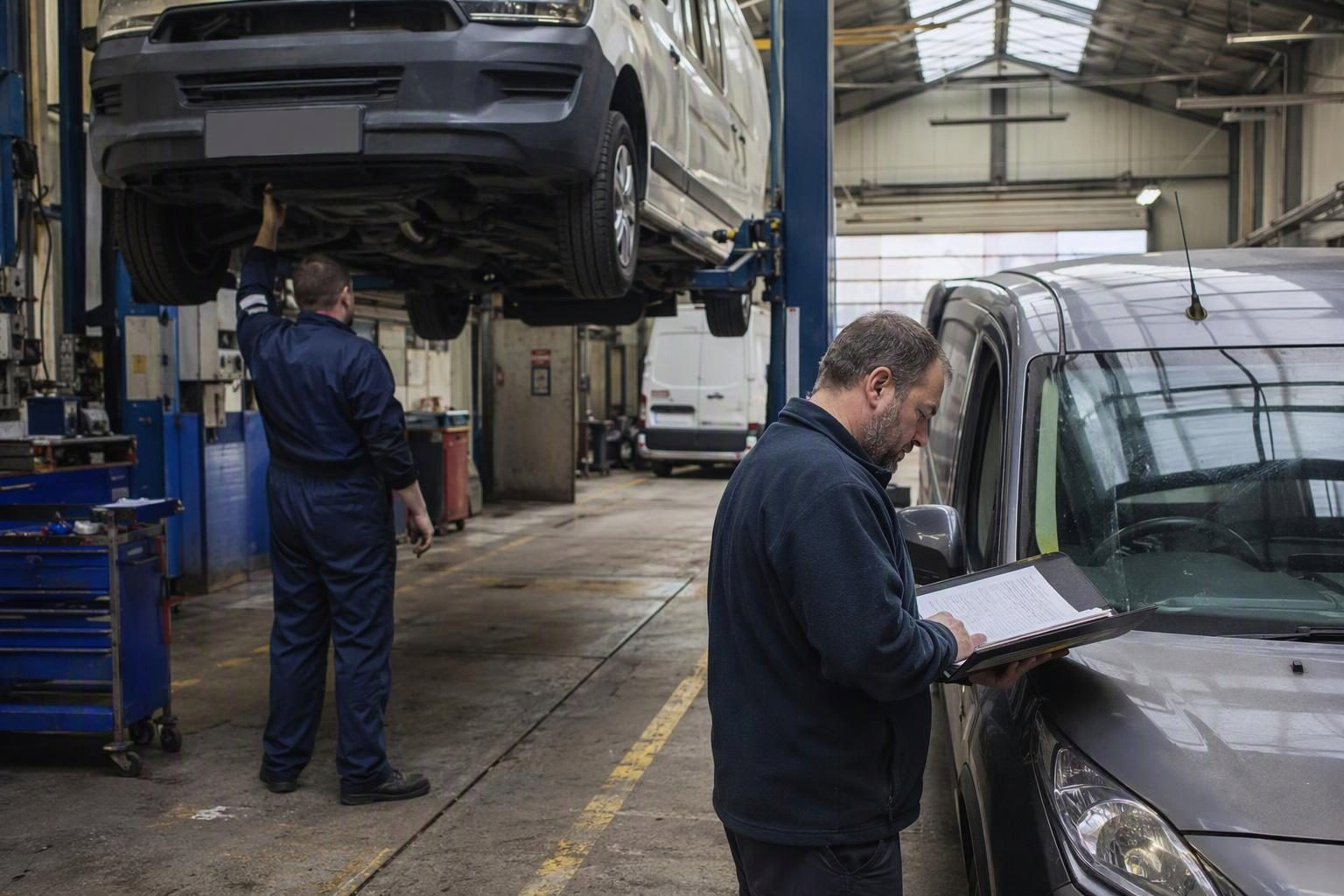
Start with the documents and compare the symptoms
Open the repair order, estimate, and invoice from the previous repair. Check what the repair shop was asked to do, which parts it replaced, and what problem the driver reported. Note the repair date, the mileage when the vehicle was returned, and its current mileage. Include the previous repair order number in the new report so the service centre can quickly find the vehicle’s history.
Compare the current symptoms with those reported before the repair. Describe whether the driver is observing exactly the same behaviour, whether a different warning has appeared, or whether the problem occurs under different conditions. A fault can have the same visible symptom but a different cause. Report the facts rather than assuming that the repair shop carried out the work incorrectly.
- Prepare the registration number and VIN, the previous repair order number, and the repair documents.
- Record the vehicle’s mileage at the time of the previous repair and its current mileage.
- Put together a timeline: when the symptom returned, how often it occurs, and what happens beforehand.
- Keep a photo of the warning or a short video if you can record it without interfering with the vehicle.
- If you have a fault code reading, provide it with the date and mileage. Do not clear the codes before diagnostics.
Submit the claim in writing and specify the next step you expect
Email your report to the repair shop and keep a copy in the vehicle’s records. Describe the symptom precisely: at what speed, temperature, or load it occurs, or during which activity, how long it lasts, and whether it is identical to the symptom reported before the repair. Also state whether the vehicle is immobilised and whether the driver considers it safe to drive.
Ask the repair shop to register the report as a claim relating to the previous repair and to investigate the cause. Do not agree in advance to replacing additional parts. First establish whether the service centre will inspect the vehicle as part of checking the previous work or is proposing a separately chargeable diagnostic service. If diagnostics may incur a charge, agree on the scope and maximum cost in advance.
- Specify the date and number of the previous repair order.
- Describe the symptom, the conditions in which it occurs, how often it occurs, and the current mileage.
- Ask for a diagnostic appointment and a date by which you will receive information about the findings.
- State that any further paid work or parts require prior approval from the designated person at your company.
- Keep a copy of the message you sent and confirmation that it was delivered.
Ready-to-use message template for the repair shop
Adapt the text below to your situation. Fill in the fields, and do not state that the vehicle is safe if you are not sure. If the repair shop proposes a different course of action, ask for it in writing, including the scope and cost.
- We are reporting that the symptom described in repair order no. [number] has occurred again following the repair carried out on [date]. Symptom: [description]. It occurs under the following conditions: [description], with the following frequency: [description]. Current vehicle mileage: [mileage].
- Please investigate the cause and advise whether the problem may be related to the previous repair. Please confirm the diagnostic date and provide the findings by [date or time].
- We do not authorise any additional paid work or parts without prior written approval from [name, surname, or job title]. Please state separately any diagnostic charge, the expected date when the vehicle will be ready, and whether it is safe to drive the vehicle to your repair shop.
Make sure the repair order is clear when you hand over the vehicle
When handing over the vehicle, ask the repair shop to record that you are reporting the recurrence of a symptom following a specific repair. Check that the document includes the mileage, dashboard warnings, and a list of any photos or recordings provided. Leave copies of the documents or email them to the repair shop to avoid later disputes about what it received.
Agree on who at the service centre will provide the diagnostic findings and who at your company can approve further costs. If inspecting removed parts could be relevant, ask the repair shop to keep them until the matter is clarified. This is a practical way to preserve documentation, not a separate statutory complaints procedure.
Agree on a specific time or day for the first update, rather than accepting a general promise that the service centre will get back to you. Ask for the expected ready date, parts availability, and whether the vehicle can be prioritised. Also record which work the repair shop considers chargeable before leaving the vehicle.
- Do not sign a blank repair order or authorise unlimited work.
- Ask the repair shop to call before exceeding the agreed cost or expanding the scope of work.
- Keep a copy of the signed repair order and your correspondence with the service centre.
Safety first, then arrange a replacement vehicle
If the fault could affect the brakes, steering, vehicle stability, engine temperature, or driver safety, do not use the vehicle for work until the service centre has assessed it. Arrange safe transport or towing. Do not attempt to repair safety systems yourself or clear warnings just to get the vehicle back on the road.
If the vehicle cannot be used, check availability of a replacement vehicle, whether its tasks can be reassigned to another vehicle, and the repair timeline at an alternative repair shop. If you are considering moving the vehicle, document the symptoms first and ask the original repair shop for its position, provided this does not delay action needed for safety reasons. Record why the company incurred towing or replacement vehicle costs, and keep the receipts.
- Ask the repair shop whether it is safe to drive the vehicle there. If in doubt, arrange transport.
- Establish the expected downtime and the date of the next update.
- Check whether a replacement vehicle is available and whether another vehicle in the fleet can be used.
- Document costs and downtime, but do not assume they will automatically be reimbursed.
Do not assume the repair will be free or that a 14-day deadline applies
In a business-to-business relationship between a company and a repair shop, do not automatically apply consumer complaint rules or assume that the repair shop must always repeat the repair free of charge. The agreed scope of service, the terms of the repair order, the repair shop’s conditions, any warranty on the service or installed part, and the cause of the current symptom are all relevant. The name of a document alone does not determine which legal rules apply.
Do not apply the consumer 14-day deadline to a business contract without checking whether it applies. Set a reasonable response deadline in your report and ask the repair shop to confirm it, but do not present it as a universal statutory deadline for business-to-business relationships. If there is a dispute about liability or significant costs are involved, check the documents and consult a lawyer about the specific situation.
- Check the warranty terms for the service and parts, along with the documents from the previous repair.
- Keep the investigation of the cause separate from the decision to authorise another repair in your correspondence.
- Keep receipts for towing, a replacement vehicle, and additional diagnostics. Reimbursement is not automatic.
Turn a recurring fault into a fleet quality check
If your company has several or dozens of vehicles, record repeat reports in a single log: vehicle, repair shop, type of repair, mileage, date the symptom returned, and number of days off the road. To compare results, calculate the symptom recurrence rate: the number of vehicles for which the same symptom was reported again within a selected time or mileage window, divided by the number of completed repairs in the same dataset, expressed as a percentage. For example, 3 vehicles with a repeat report out of 60 completed repairs gives a rate of 5%.
Decide in advance which repairs and symptoms will be included in each dataset. A window such as 30 days or 1000 km after the vehicle is returned is an internal company rule for comparing results. It is not a statutory claims deadline or a universal repair industry standard. The rate shows repeat reports, but does not establish that each one resulted from defective repair work.
Track separately the time spent waiting for diagnostics, parts, a company decision, and the repair itself. Compare this with replacement vehicle costs and other documented expenses. This will help you assess whether the problem is repair quality, a lack of updates from the service centre, or excessive waiting time. If downtime recurs, agree with the repair shop on a standard reporting process, a contact person, and cost approval rules.
- Record repeat occurrences of the same symptoms and the repair shop’s findings.
- Compare repair shops based on the timeliness of updates, downtime, and costs.
- Decide within your company who reports a problem, who approves diagnostics, and who authorises the repair.
Summary
If you need support coordinating communication with a service centre, find out about the scope of FleetPoint repair coordination: /koordynacja-napraw/.
More from the FleetPoint knowledge base
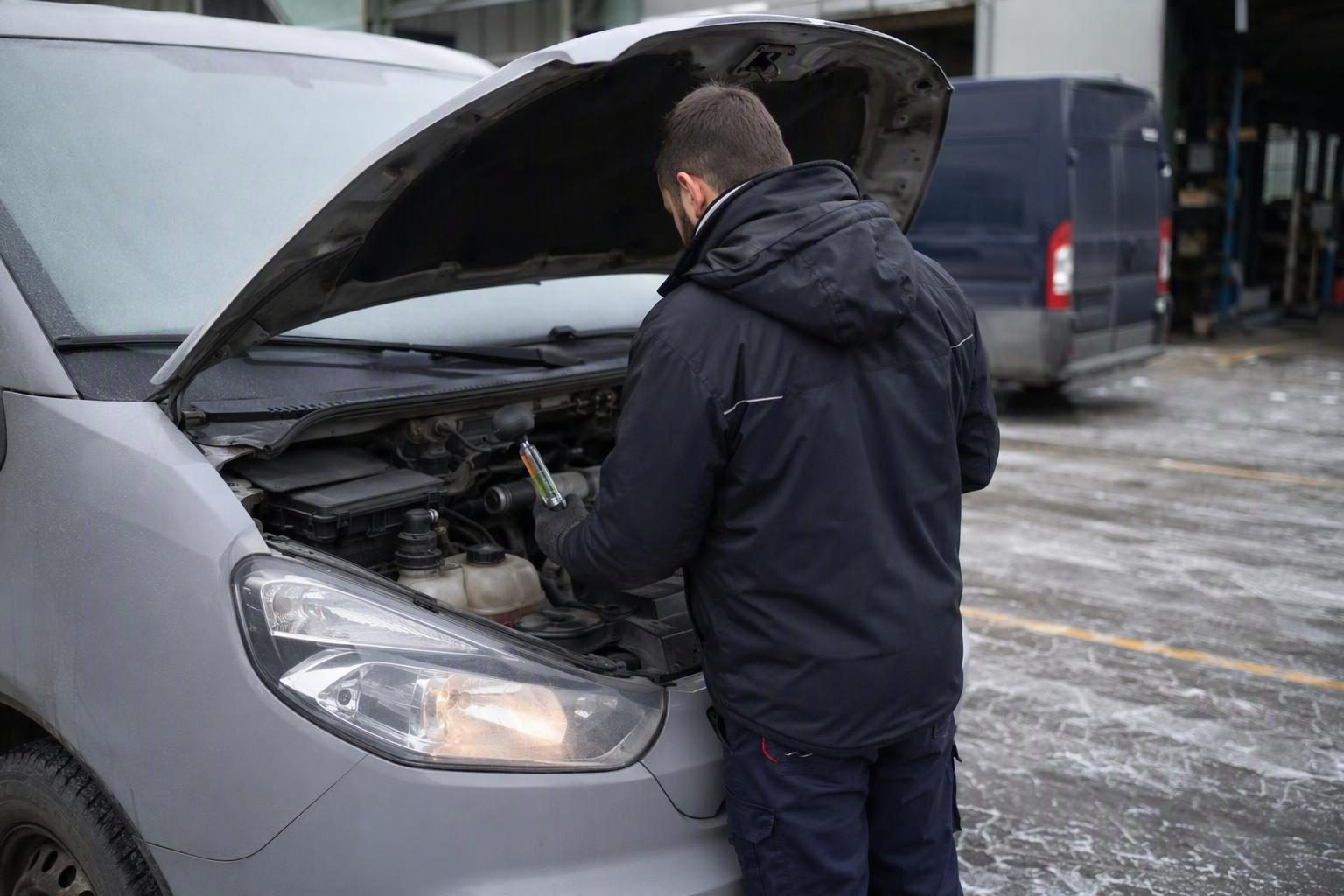
Coolant in vans before winter: planning a check of frost protection
Find out which vans need a pre-frost coolant check, how to interpret the test result and plan visits without unnecessary downtime.
Read article
Lighting checks for a delivery fleet: how to plan inspections and repairs without unnecessary downtime
How to check company van lights, record faults and schedule measurements and repairs without taking several vehicles off the road at once.
Read article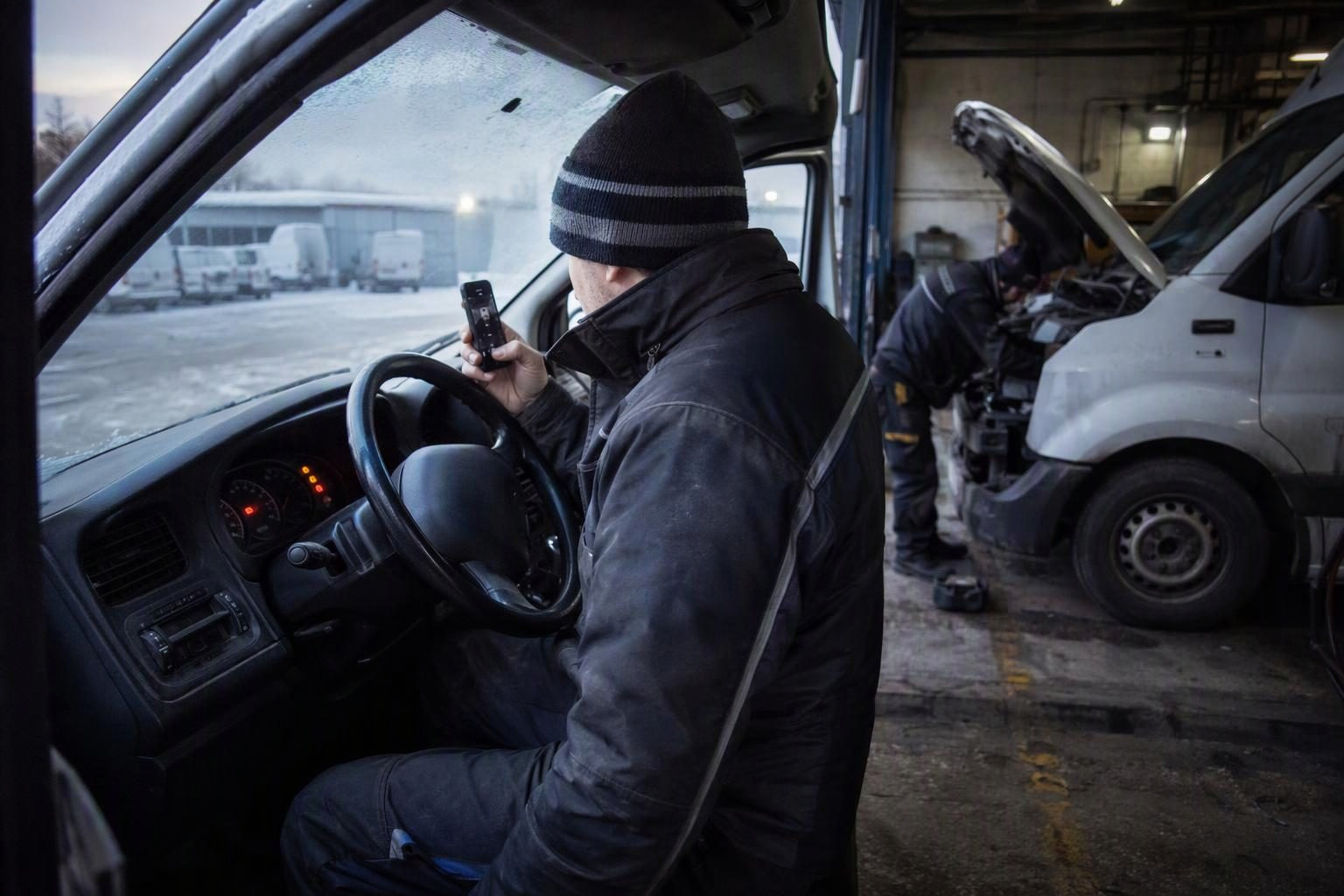
Diesel van will not start after an overnight frost: when to book fuel system diagnostics
Find out what symptoms to report, when to hold a van back from a trip and what the workshop should check in the fuel system.
Read article